


In this guide
This guide began when I tried to do something completely ordinary: buy another magnesium glycinate for myself.
I had been taking Bulk Magnesium Bisglycinate for a few months, and it had been fine for me. I was not dealing with an obvious problem or setting out to expose the product. I simply wondered, before buying again, whether it was actually a good magnesium glycinate—and what “good” would mean beyond the fact that I had tolerated it.
That question opened a small supplement Pandora’s box. Was glycinate different from bisglycinate? Did the large milligram number describe magnesium or the whole compound? Could a “pure” bisglycinate really contain 20% elemental magnesium? Did a named chelate, GMP badge or “third-party tested” claim prove anything about the tablets in the bottle? Every answer introduced another distinction that most shopping guides skipped.
Magnesium glycinate should be one of the easier supplements to buy. It is one mineral bound to a small amino acid. Somehow, the shelf is full of 100 mg capsules, 500 mg tablets, 2,000 mg “high-strength” servings, “fully reacted” chelates, buffered chelates, three-form sleep blends and badges that all appear to mean “tested” while proving very different things.
The useful question is not simply, “Which brand is best?” It is: what can this label actually prove, what would require a laboratory, and is magnesium glycinate even a good match for the reason I am buying it?
Research guide: I checked current labels and manufacturer disclosures, US, EU and UK supplement rules and official intake guidance, certification programmes, molecular data, comparative-absorption research and clinical evidence for sleep and muscle cramps. I have personally used Bulk magnesium bisglycinate for several months and a Naturmil product bought through Zumub. “Fine for me” describes my experience, not the product’s purity, potency or effectiveness. I have not laboratory-tested either one or run a controlled comparison of the products in this guide. Formula, certification, price and stock information can change. Research last checked 31 August 2026.
The short version
A good magnesium glycinate does five things:
- It states the elemental magnesium per serving and makes the real serving size obvious.
- It names every magnesium source instead of hiding behind “magnesium complex.”
- If it claims to be pure bisglycinate and gives the compound mass, the chemistry is plausible: pure anhydrous magnesium bisglycinate cannot be more than about 14.1% elemental magnesium by mass.
- It offers product evidence proportionate to its claims: a verifiable finished-product certification or lot-matched certificate is stronger than a generic “lab tested” sentence.
- It gives a practical dose without turning one serving into a handful of capsules or adding ingredients you did not intend to buy.
Glycinate or bisglycinate: does the name matter?
Usually, no. Magnesium carries a 2+ charge, while each glycinate carries a 1− charge, so the commonly sold chelate associates one magnesium ion with two glycinate molecules. “Bisglycinate” describes that two-glycinate structure more explicitly; “glycinate” is the usual shorthand. “Diglycinate” is another synonym. PubChem groups these names under the same compound. (PubChem compound record)
The prefix is therefore a poor way to rank products. A bottle labelled “bisglycinate” is not automatically purer or better absorbed than one labelled “glycinate.” The useful distinctions appear elsewhere on the label:
- Is glycinate the only magnesium source, or is oxide, citrate or another salt also present?
- Does “buffered” appear anywhere, and does the brand explain the buffer?
- Are the elemental dose and, when disclosed, the chelate mass chemically compatible?
- Is the named raw material supported by evidence for the finished product?
There is one caveat: supplement terminology is not applied consistently. A brand may use “magnesium glycinate” loosely for an unbuffered bisglycinate, a buffered glycinate/oxide material or a less-specific amino-acid chelate. Treat glycinate and bisglycinate as equivalent names, then verify the formula rather than trusting either word.
The five-minute label audit
1. Find the elemental magnesium
The number that lets you compare doses is the line that says magnesium, not the large number beside “magnesium glycinate” on the front.
In the US, the Supplement Facts panel declares the weight of the mineral rather than the weight of the entire source compound. EU and UK food-supplement rules likewise require the vitamin or mineral amount per recommended daily portion and its percentage of the applicable reference value. (NIH magnesium fact sheet; EU food-supplement directive; UK food-supplement labelling guidance)
That means these are different statements:
- 500 mg magnesium bisglycinate is the weight of magnesium plus its glycine partners.
- 100 mg magnesium, from magnesium bisglycinate is the elemental mineral dose.
- 200 mg per serving of two capsules means 100 mg per capsule, not 200 mg.
“Elemental” does not mean that metallic magnesium is rattling around in the capsule. It is nutrition-label language for the amount of magnesium contributed by the compound.
2. Read the source and the “other ingredients”
Whether the front says glycinate, bisglycinate or diglycinate, inspect the complete source and ingredient lines. Paying more simply because one label has the prefix “bis” is paying for a syllable.
Then check whether the label also names magnesium oxide, citrate or another magnesium salt. A blend is not automatically a bad product. It is a different product from the single-source glycinate implied by the front.
Vague wording deserves a question:
- “magnesium complex” without the individual sources;
- “amino acid chelate” without naming the amino acid or grade;
- “buffered chelate” without explaining the buffer;
- “from magnesium bisglycinate” while another magnesium source appears elsewhere on the label.
3. Divide elemental magnesium by the disclosed chelate mass
Do this only when the label gives both numbers.
elemental magnesium ÷ magnesium-bisglycinate mass × 100
For example, a serving that claims 200 mg elemental magnesium from 1,000 mg magnesium bisglycinate produces:
200 ÷ 1,000 × 100 = 20%
That is where a little chemistry becomes unusually useful.
Why 14.1% is the revealing number
Magnesium bisglycinate has the formula C4H8MgN2O4 and a molecular mass of 172.42 g/mol. Magnesium contributes about 24.3 g of that mass. The anhydrous compound is therefore approximately 14.1% magnesium by mass. (PubChem molecular data)
Commercial unbuffered materials are often standardised below that theoretical ceiling, commonly around 10–14%, because real raw materials can be hydrated and produced to different specifications. Lower than 14.1% is not inherently suspicious. Higher than 14.1% cannot be explained by pure anhydrous magnesium bisglycinate alone.
That does not let a shopper identify the exact cause. A 20% claim could reflect an additional magnesium source, a buffered raw material, imprecise naming, a compound-mass convention or an incorrect disclosure. Label arithmetic is a red flag and a question generator, not an accredited chemical analysis.
It does give us a better customer-service question than “Is your product pure?”:
Your label states X mg magnesium bisglycinate and Y mg elemental magnesium, a ratio of Z%. Pure anhydrous magnesium bisglycinate has a theoretical magnesium ceiling of about 14.1%. Which exact raw-material grade supplies the additional magnesium, and can you provide its specification and a finished-product COA for my lot?
The capsule-size clue is useful, but weaker
Pure bisglycinate is bulky. At the theoretical maximum, 100 mg elemental magnesium needs at least about 709 mg of anhydrous compound. At a 12% commercial specification, it needs about 833 mg. A genuine 200 mg elemental dose at 12% needs about 1.67 g of raw material before capsule shell or excipients.
This explains why plausible products often require two to four capsules. It also makes “200 mg pure glycinate in one tiny capsule” worth investigating. But capsule size, powder density and fill method vary. Do not declare a product fake from a photograph or an empty-capsule experiment.
Buffered is a trade-off, not a verdict
On magnesium labels, “buffered” usually describes bisglycinate combined with magnesium oxide. The reason is practical: magnesium oxide is about 60% magnesium by mass, so it can raise the elemental dose while reducing raw-material cost and capsule burden.
This is not merely an internet theory. Albion’s ingredient catalogue has listed an original magnesium bisglycinate chelate at 10% magnesium and a buffered grade at 18%, explicitly stating that the buffered form uses magnesium oxide. (Albion product catalogue)
The important distinction is disclosure:
- Transparent buffered product: names glycinate and oxide, states the elemental dose and charges accordingly.
- Opaque product: presents itself as pure glycinate while the stated numbers are chemically inconsistent and the brand will not explain the source.
Oxide is generally less soluble and often less bioavailable than more soluble organic salts. It is also used as a laxative at higher doses. That does not make every molecule useless or every buffered formula a scam. A shopper who tolerates it may rationally prefer the lower price or fewer capsules. Someone specifically paying for a gentler single-source product has a good reason to avoid it.
The “magnesium oxide is only 4% absorbed” myth
The 4% number came from a small 2001 study that estimated bioavailability from changes in urinary magnesium after people took commercial products. It found magnesium oxide performed much worse than chloride, lactate and aspartate. That is meaningful evidence against treating oxide as equivalent to more soluble forms, but it is not a universal absorption constant. (Firoz and Graber study)
In a different stable-isotope crossover study of 12 people with ileal resections, average absorption was 23.5% from magnesium diglycinate and 22.8% from oxide across the whole group. The chelate did better in the four poorest oxide absorbers and was better tolerated. The population, method and purpose were very different, which is precisely why one percentage should not be pasted onto every person and dose. (1994 crossover trial)
The defensible conclusion is modest: oxide usually performs worse than more soluble forms, while the exact absorbed percentage varies.
A trademark is not the whole specification
TRAACS and Albion are meaningful raw-material identifiers. They suggest a named supplier and defined manufacturing technology, which is better than an anonymous “premium chelate.” They do not automatically tell you:
- whether the brand bought the original or buffered grade;
- how much of the raw material is in the serving;
- whether the finished tablet delivers its label claim;
- whether this lot passed contaminant and disintegration testing.
Albion has offered both original and buffered bisglycinate. The exact grade matters. Raw-material credibility also does not replace finished-product verification after a manufacturer has blended, tableted, encapsulated and packaged it.
Magnesium stearate is not magnesium oxide
Magnesium stearate is a lubricant used in small amounts to stop powders sticking to manufacturing equipment. It is not the active magnesium source, and its presence does not turn an unbuffered glycinate into a buffered product.
Too much lubricant or poor mixing can affect how a particular tablet disintegrates, which is a formulation-quality question. That is different from the online claim that normal use of magnesium stearate is inherently toxic or blocks supplement absorption. EFSA concluded that magnesium salts of fatty acids, including magnesium stearate, raised no safety concern at reported uses and did not need a numerical acceptable daily intake. (EFSA safety re-evaluation)
“No magnesium stearate” may reflect a formulation preference. It is not a substitute for potency, contaminant and disintegration evidence.
What supplement quality evidence actually means
“Third-party tested” is not a defined level of proof. It can mean an accredited lab tested every lot of finished product, or that an unnamed contractor once tested a raw ingredient. A useful hierarchy is:
| Evidence | What it tells you | What it does not automatically tell you |
|---|---|---|
| Verifiable finished-product certification | The listed product is subject to a defined independent programme for label claims and contaminants | That every product from the brand is certified |
| Lot-matched finished-product COA | The named batch was tested against stated specifications | That the lab was independent or that the methods prove chelation |
| Anonymous retail-sample test | A normally purchased sample matched the reported tests | That every future lot will match |
| Named raw-material supplier or certificate | The input has a traceable identity/specification | That the final capsule contains the correct dose |
| GMP facility registration/certification | The factory’s quality system and processes were audited | That the individual product was independently sampled and tested |
| “Lab tested” marketing copy | The brand says some testing occurred | Which sample, laboratory, method, limit or result was involved |
NSF makes the GMP distinction explicit: GMP registration applies to the production facility, and the GMP auditor does not test samples of individual products. NSF/ANSI 173 product certification adds label-claim and contaminant testing. NSF Certified for Sport adds banned-substance screening. (NSF explanation)
USP Verified is another finished-product programme. Its mark indicates that a product contains the declared ingredients and potency, stays below specified contaminant limits, is made under audited practices and disintegrates appropriately. (USP programme summary)
The certification must belong to the exact product, not merely the brand or factory. For example, Thorne Magnesium Bisglycinate powder currently appears with specific lots in NSF’s Certified for Sport directory. That status should not be transferred to a Thorne capsule or to every Thorne supplement. (Live NSF product listing)
What a useful COA should contain
Ask for a certificate that matches the lot printed on the bottle and shows:
- product name, lot, manufacture or test date and laboratory;
- methods and specification limits, not just the word “pass”;
- actual numerical potency result for magnesium;
- actual results for lead, cadmium, arsenic and mercury;
- appropriate microbial results;
- the lab’s accreditation and scope when third-party or ISO 17025 testing is claimed.
A raw-material specification is not a finished-product COA. A generic example with the lot removed is not evidence for the bottle in your hand.
Potency testing also has a subtle limit: a method that measures total magnesium can show that the mineral is present without proving that it is all present as a reacted bisglycinate chelate. A strong purity claim may require appropriate raw-material identity work in addition to total-magnesium and contaminant tests.
How to evaluate any magnesium brand you find
A guide should still work when the product is new, local or absent from somebody else’s ranking. Use the same worksheet for every candidate before looking at reviews or deciding which brand “wins.”
| Record this | Good evidence | Reason to ask another question |
|---|---|---|
| Exact product and format | Full product name, capsule/tablet/powder and current label | Evidence or certification shown only for a different product from the brand |
| Real serving | Serving size plus elemental magnesium per serving and per unit | Front-label milligrams with no obvious per-capsule amount |
| Every magnesium source | Glycinate/bisglycinate and every other magnesium salt named | “Magnesium complex,” unexplained chelate or missing buffer |
| Chelate arithmetic | If both masses are given, elemental magnesium is no more than 14.1% of claimed pure bisglycinate | Higher ratio presented as pure glycinate with no explanation |
| Finished-product proof | Exact-product certification or a current, lot-matched finished-product COA | GMP badge, raw-material certificate or vague “third-party tested” claim used as bottle-level proof |
| Practical dose | Dose can be adjusted without unwanted extras or an unrealistic number of units | Oversized fixed serving, stacked magnesium products or unnecessary active ingredients |
| Price | Cost per 100 mg elemental magnesium at the dose you would actually use | Bottle price, subscription price or cost per capsule used without dose normalisation |
| Claim discipline | Claims match the clinical evidence and acknowledge uncertainty | Promises to treat sleep, anxiety, pain, cramps, brain function and recovery at once |
Summarise each candidate with three verdicts rather than one misleading score:
- Formula confidence: explained, incomplete or internally questionable.
- Product assurance: strong, moderate or weak, based on the evidence ladder above.
- Personal fit: suitable dose, format, price and intended use—or not.
Do not average these into a ten-point score. A chemically plausible formula can still have weak finished-product evidence. A well-certified powder can still be inconvenient or unnecessary for a particular shopper.
This is the minimum information worth saving when comparing brands:
Product and exact format:
Serving size:
Elemental magnesium per unit:
All magnesium sources:
Claimed glycinate mass and calculated percentage, if available:
Buffered or unbuffered, with evidence:
Exact-product certification or lot-matched COA:
Cost per 100 mg elemental magnesium:
Unanswered question for the brand:
My current shortlist: what I used, what I would buy and why
There is no honest single winner because formula transparency, finished-product assurance and personal convenience are different questions. My current “top” is therefore a shortlist with a reason attached to every position—not a disguised laboratory ranking.
Why I am ordering Solaray next: when my current Bulk bottle runs out, I plan to order the Solaray capsules. It is not because the research proves that Solaray is the best magnesium glycinate. It is because its independently checked retail sample gives me a more interesting real-world comparison than simply buying Bulk again, while the undisclosed compound mass leaves a worthwhile label question to pursue.
This will turn the guide into a continuing field note. When the Solaray bottle arrives, I will record the seller, current label, lot and expiry; ask whether a lot-matched COA is available; note the four-capsule serving burden and gastrointestinal tolerance; and compare the experience with Bulk without pretending that one person’s before-and-after impression is a clinical trial. The article will be updated after meaningful use rather than issuing a premature review on delivery day.
Worked examples: five current labels
This is an evidence audit, not a permanent ranking. It shows how the worksheet behaves when brands disclose different kinds of information. Products can change, and no sample below was sent to a laboratory for this guide.
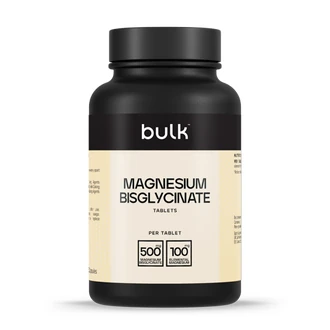
Used by me
Bulk Bisglycinate
Formula needs an explanation
The unusually specific label is useful, but its stated 20% elemental ratio cannot be explained by pure anhydrous bisglycinate alone.
Promotional packshot: Bulk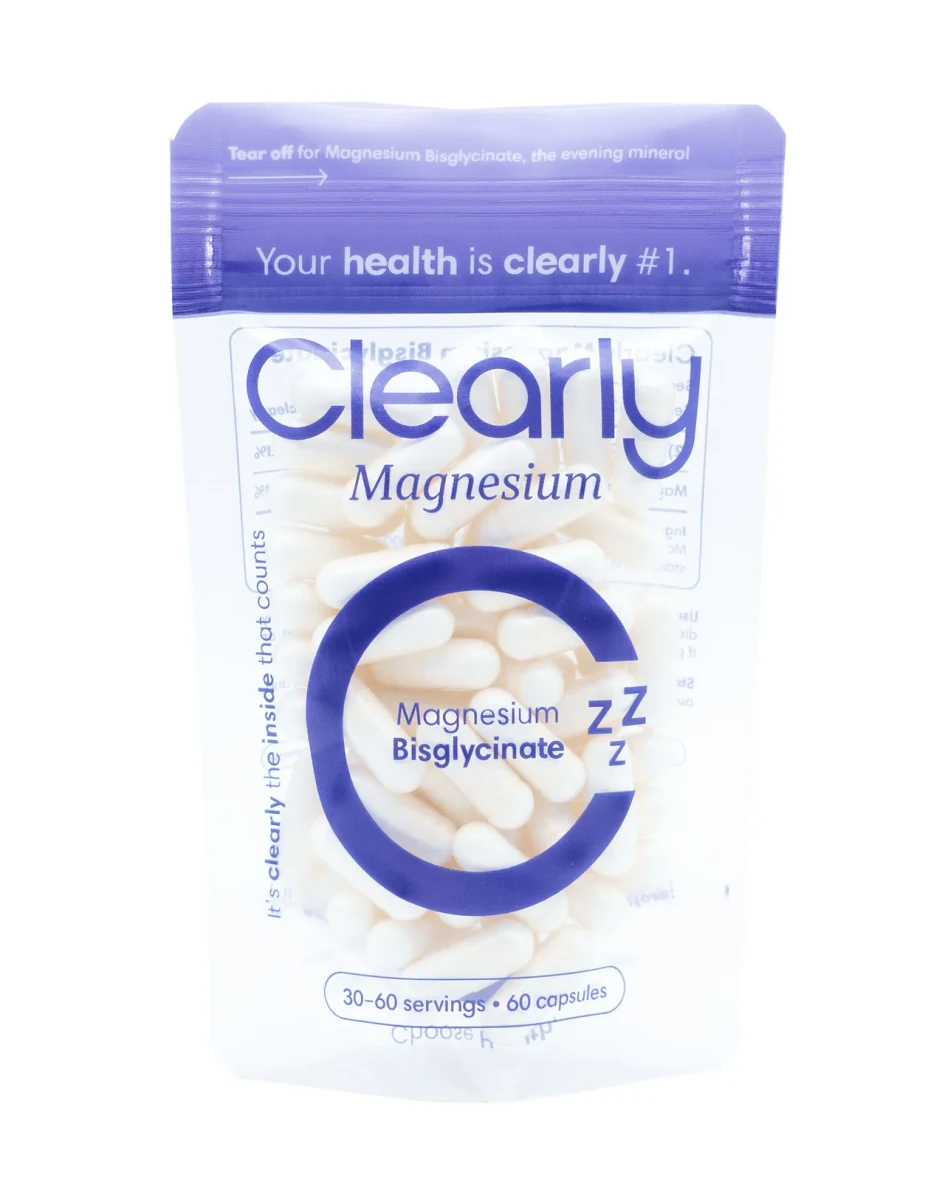
Plausible chemistry
Clearly Bisglycinate
Clearer formula, generic testing claim
Its 12% unbuffered disclosure is chemically plausible. The public product page does not provide an identified lot-matched certificate.
Promotional packshot: Clearly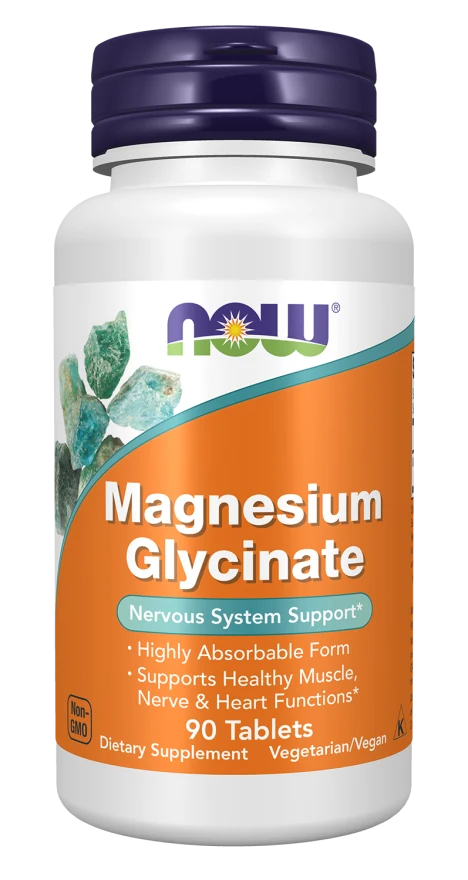
Named raw material
NOW Magnesium Glycinate
Traceable source, incomplete arithmetic
The current official label names Albion bisglycinate but does not disclose total chelate mass, so the 14.1% calculation cannot be run.
Promotional packshot: NOW Foods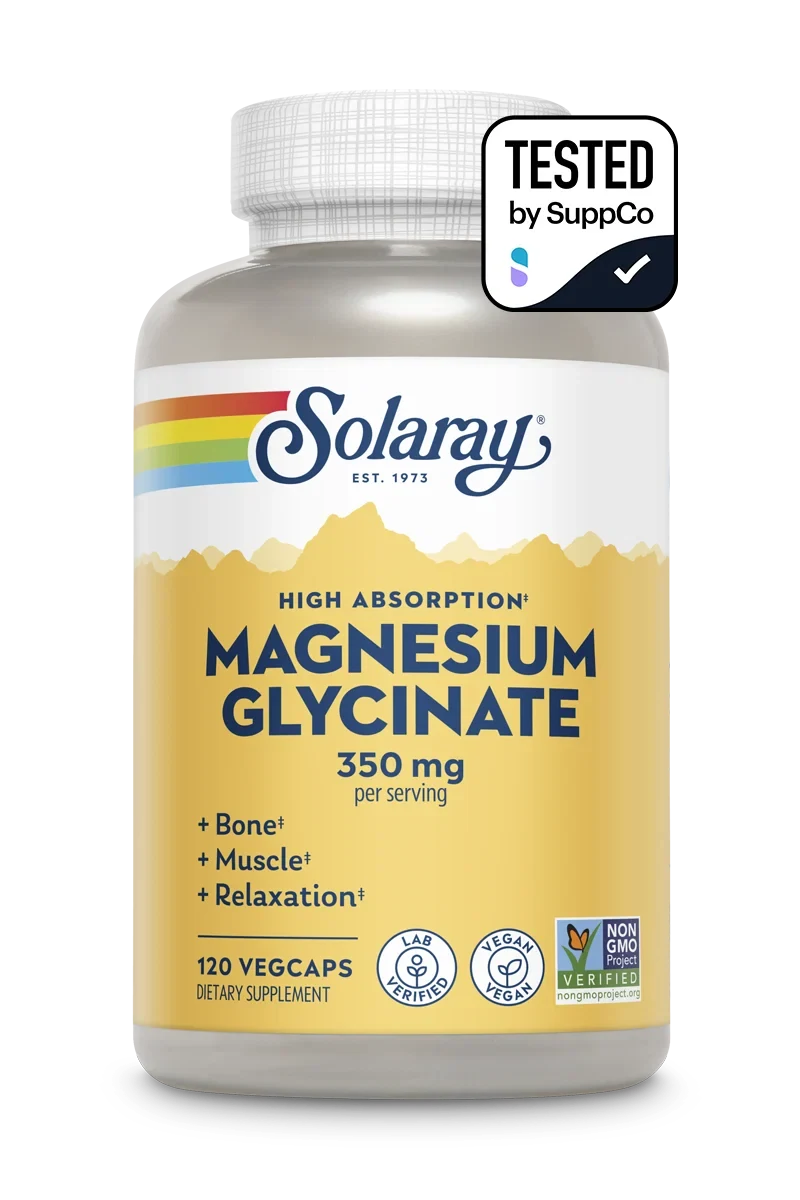
My next field test
Ordering next
Solaray Magnesium Glycinate
Stronger sampled-product evidence
My next field-test purchase. Solaray reports independent testing of a retail sample through SuppCo, but does not publish the compound mass needed for a purity calculation.
Promotional packshot: Solaray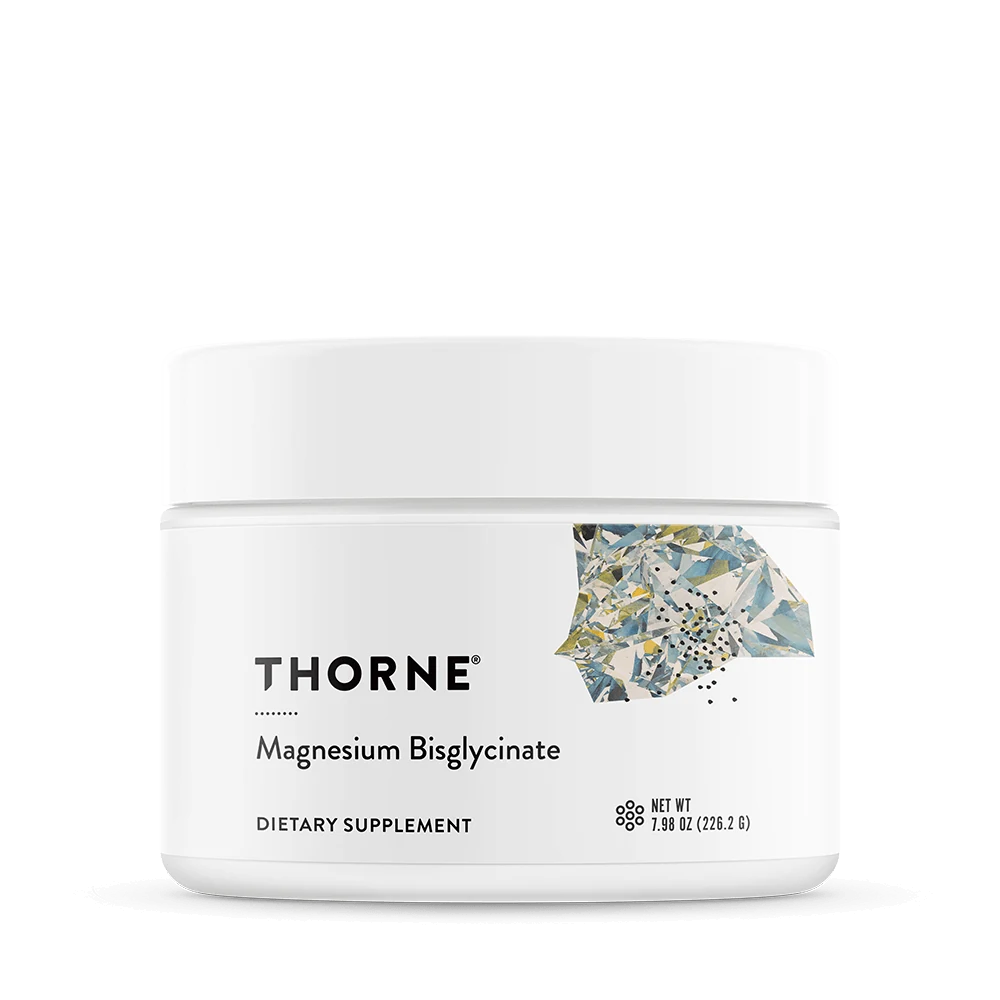
Certified powder
Thorne Magnesium Bisglycinate
Exact product in NSF directory
The powder and current lots appear in NSF's Certified for Sport directory. That is strong assurance evidence, not proof that every shopper needs its price or format.
Promotional packshot: Thorne| Product | Formula disclosure | Finished-product evidence | What remains unresolved |
|---|---|---|---|
| Bulk Bisglycinate tablets | 1,000 mg bisglycinate supplies 200 mg magnesium per two tablets: 20%; oxide is not named | General quality language; no public lot-matched certificate found on the product page | The disclosed ratio cannot come from pure anhydrous bisglycinate alone; the exact raw-material composition needs an explanation |
| Clearly Magnesium Bisglycinate | Says 100 mg per capsule from a 12% unbuffered material; the arithmetic is plausible | “Lab-tested in Europe”; no public lot-matched COA, lab or certification programme found on the page | Strong formula story, weaker public evidence for the finished lot |
| NOW Magnesium Glycinate tablets | Current page says 200 mg from Albion bisglycinate per two tablets; total chelate mass is not disclosed | Intertek GMP certification and in-house quality testing are presented | Current label does not allow the purity-ratio calculation; GMP is not individual-product certification |
| Solaray Magnesium Glycinate | 350 mg per four capsules; describes in-house chelation using magnesium, glycine, water and heat; total chelate mass is not disclosed | Says a retail sample was independently checked through SuppCo in ISO 17025 labs for identity and label content | Stronger sampled-product evidence, but no public compound mass for the 14.1% audit |
| Thorne Magnesium Bisglycinate powder | Single-form powder; exact current label should be checked for the target market | Exact powder product and current lots appear in NSF Certified for Sport’s directory | Certification does not establish that its higher price or format is necessary for every shopper |
Current sources: Bulk label, Clearly label and purity explanation, NOW label, Solaray label and testing disclosure, Thorne NSF listing.
The revealing comparison is Clearly versus Solaray. Clearly publishes chemistry that a shopper can audit, but its public “lab-tested” proof is generic. Solaray does not publish enough compound mass to run the purity calculation, but offers stronger evidence that a retail sample matched its label. Neither disclosure makes the other axis disappear.
Bulk demonstrates the opposite problem: its front and nutrition panel are admirably specific, but their 20% ratio creates a chemical question that the ingredient list does not answer.
Claims on otherwise useful pages still need checking
Clearly’s ratio explanation is one of the better consumer explanations in the category. The same page also turns the 4–5% oxide result into a universal rule and says the compound attached to magnesium determines where it works best in the body. Those claims are much stronger than the evidence.
Solaray’s independent sample result is valuable. Its GMP facility badge alone would not have been equivalent to finished-product certification, and BioPerine does not become necessary merely because the brand added it.
NOW’s named Albion source is a useful traceability clue. It does not, by itself, reveal whether the exact grade is buffered or independently certify the finished tablets.
This is why trustworthy shopping requires reading a brand page in pieces rather than declaring the whole page “science-backed” or “marketing.”
Is magnesium glycinate actually the right form?
It is reasonable, but not the proven absorption champion
A 2021 systematic review found that organic magnesium formulations tended to be more bioavailable than inorganic ones and that absorption depended on dose. The underlying comparison literature was small and heterogeneous. It did not establish pure bisglycinate as the universal winner for healthy shoppers. (Systematic review)
The often-cited diglycinate study involved only 12 people with ileal resections. Across the full group, its absorption was not significantly different from oxide, although it performed better in the poorest absorbers and was better tolerated. That is interesting specialist evidence, not proof that glycinate beats every other soluble form in everyone.
Magnesium citrate has repeatedly performed better than oxide in comparative studies and is usually cheaper. It can be more laxative for some people. If citrate is well tolerated, the evidence does not give every shopper a reason to pay a glycinate premium. (Citrate versus oxide study)
The practical case for glycinate is therefore plausible absorption plus tolerability, not a settled gold medal.
Sleep: one encouraging trial, a small effect
The first substantial placebo-controlled trial specifically of magnesium bisglycinate was published in 2025. It enrolled 155 adults reporting poor sleep and used 250 mg elemental magnesium daily for four weeks, taken 30–60 minutes before bed. Insomnia Severity Index scores improved more than placebo, but the effect was small (d = 0.2), and the study found no clear differences in the other psychological outcomes. It used self-reported outcomes rather than objective sleep measurement. (Trial report)
The intervention also supplied about 1.52 g of glycine. Dedicated glycine sleep studies commonly used 3 g, so it is possible that glycine contributed, but the trial cannot separate the magnesium effect from the glycine effect or interaction. (Example 3 g glycine trial)
Earlier systematic reviews described the magnesium-and-sleep evidence as low quality or inconsistent. The 2025 trial makes the story more interesting; it does not turn glycinate into a sleeping pill. (2021 insomnia review; broader sleep review)
Muscle cramps and recovery: deficiency logic is not treatment evidence
Magnesium deficiency can cause muscle contractions and cramps. It does not follow that an otherwise healthy person’s calf cramp proves magnesium deficiency or will respond to a supplement.
A 2020 Cochrane review found magnesium was unlikely to provide a clinically meaningful reduction in ordinary idiopathic cramps, mostly studied as nocturnal leg cramps in older adults. It found no randomised trials for exercise-associated muscle cramps. (Cochrane review)
That does not rule out benefit when a person is genuinely deficient. It does rule out presenting magnesium glycinate as a well-established general treatment for muscle pain, workout recovery or every kind of cramp.
Anxiety and “calm”: evidence is still uncertain
Mechanistic explanations involving magnesium, GABA and glycine are plausible. Human trials use different forms, doses, populations and co-ingredients. A 2024 systematic review concluded that larger randomised trials are needed to establish efficacy, form and dose for anxiety and sleep. (Systematic review)
“Supports the nervous system” is not the same claim as “treats anxiety.” A quality supplement cannot make an unsupported intended use become evidence-based.
Claim audit: what is supported, misleading or simply a myth?
The stamps below are deliberately stricter than “true” and “false.” Supported means the statement is backed by chemistry, regulation or reasonably direct evidence. Misleading means it contains a useful fragment but pushes the conclusion too far. Not established means the claim may be plausible, but good evidence has not settled it. The supporting studies and regulatory sources are discussed in the sections above.
Glycinate and bisglycinate usually name the same chelate.
Bisglycinate describes magnesium associated with two glycinate molecules; glycinate is the common shorthand. The name alone does not rank quality.
Pure anhydrous magnesium bisglycinate tops out at about 14.1% elemental magnesium.
That ceiling follows from the compound's molecular formula. It is a label-plausibility test, not proof of what an unknown capsule contains.
More milligrams on the front means more actual magnesium.
The large number may describe the whole glycinate compound. Compare the elemental-magnesium line per capsule or serving.
Anything above 14.1% automatically proves fraud.
It proves pure bisglycinate alone cannot explain the stated ratio. Oxide, another source, naming conventions or a label error remain possible explanations.
Buffered magnesium glycinate is fake.
It is usually a real glycinate-and-oxide blend. The problem is opaque presentation, not the existence of a disclosed lower-cost blend.
Magnesium oxide is always exactly 4% absorbed.
Four percent came from one small study and is not a universal constant. Oxide generally performs worse than more soluble forms, but absorption varies.
TRAACS on the label guarantees an unbuffered product.
Albion has offered original and buffered grades. A named raw material improves traceability, but the exact grade and finished product still matter.
A GMP badge means this bottle was independently tested.
GMP evaluates the manufacturing system. Exact-product certification or a lot-matched finished-product COA answers a different question.
‘Third-party tested’ is the same as certification.
The phrase is only useful when the product, lot, laboratory, methods, limits and results—or a defined certifier's listing—can be checked.
Glycinate is scientifically proven to be the best magnesium form.
It is a reasonable, often well-tolerated form. Research has not established universal superiority over every soluble alternative such as citrate.
Magnesium stearate is toxic or turns a product into magnesium oxide.
It is a manufacturing lubricant used in small amounts, not the active magnesium source. Product performance matters more than its mere presence.
The glycine in glycinate guarantees better sleep.
The specific sleep trial found a small average benefit and could not separate the magnesium, glycine and combined effects.
A normal serum magnesium result proves magnesium status is perfect.
Serum magnesium is clinically useful but an imperfect marker of total stores. That limitation also does not prove a hidden deficiency.
The adult daily intake target is the amount everyone should supplement.
Dietary targets include food. Supplemental upper limits are separate, and an appropriate supplement dose depends on the individual context.
Different magnesium forms reliably target different organs.
Counter-ions affect chemistry and tolerability, but neat brain-versus-heart-versus-muscle maps outrun comparative clinical evidence.
Magnesium glycinate must be taken at night.
Bedtime is convenient and was used in the sleep trial. Universal superiority over morning dosing has not been demonstrated.
Official magnesium guidance: US, EU and UK
Official magnesium numbers look contradictory only when their labels are removed. A dietary target estimates total intake from food and supplements. A Daily Value or Nutrient Reference Value standardises percentages on labels. A Tolerable Upper Intake Level is a safety benchmark, and may count only particular supplemental or added sources. None of those numbers is automatically the elemental dose a healthy shopper should buy.
NIH Office of Dietary Supplements + FDA
- Adult RDA
- Men 400–420 mg/day; women 310–320 mg/day
- Label reference
- FDA Daily Value: 420 mg
- Adult supplemental UL
- 350 mg/day from supplements and magnesium-containing medicines
The RDA includes food. The UL excludes magnesium naturally present in food. The 420 mg Daily Value is a labelling reference, not an FDA-approved dose—and FDA does not pre-approve dietary supplements for safety or effectiveness.
European Food Safety Authority + EU law
- EFSA adult AI
- Men 350 mg/day; women 300 mg/day
- Label reference
- EU Nutrient Reference Value: 375 mg
- EFSA adult UL
- 250 mg/day within EFSA's specified supplemental and added-source scope
The EFSA UL covers readily dissociable magnesium salts and compounds such as magnesium oxide in supplements, water or added foods; naturally occurring food magnesium is excluded. It is a scientific benchmark, not a harmonised EU-wide legal product maximum. National rules may also apply.
NHS + DHSC + Food Standards Agency
- NHS adults 19–64
- Men 300 mg/day; women 270 mg/day
- Label reference
- UK label reference: 375 mg NRV
- NHS consumer advice
- 400 mg/day or less from supplements is unlikely to cause harm
The NHS figure is advice, not a formal UL or statutory product cap; it also warns that more than 400 mg for a short time can cause diarrhoea. The UK has no national statutory maximum for magnesium in food supplements. Great Britain and Northern Ireland sit in distinct legal systems, although both currently use the 375 mg label reference.
Official sources checked 31 August 2026
What those differences mean when you read a bottle
- US
% Daily Valueuses 420 mg. A serving with 105 mg elemental magnesium therefore supplies 25% DV. It does not mean every adult should supplement the missing 315 mg. - EU and UK
% NRVuses 375 mg. The same 105 mg serving is 28% NRV. That percentage is a label-comparison tool, not an individual prescription or safety ceiling. - Intake targets include food. Nuts, seeds, legumes, whole grains and leafy vegetables count toward the dietary RDA, AI or UK requirement.
- Supplement benchmarks exclude at least natural food magnesium. Their precise scope and status differ, so a US, EU and UK number should never be copied into another market without its definition.
- A label-compliant product is not necessarily a well-tested one. US FDA rules, EU law and UK rules require defined label information and manufacturing responsibilities; none turns a routine magnesium supplement into a pre-approved medicine.
EU law contains one unusually concrete buying clue: the current authorised-source list names magnesium bisglycinate in Annex II. That confirms bisglycinate as a permitted magnesium source for EU supplements; it does not certify the purity, dose or finished-product quality of a particular bottle. (Current consolidated EU Food Supplements Directive)
The EU and UK require labels to give the recommended daily portion, warn against exceeding it, say that supplements do not replace a varied diet and state that products should be kept away from young children. In Great Britain the product should be called a “food supplement,” not “dietary supplement”; Northern Ireland continues to apply EU food law in this area. (EU Article 6 requirements; FSA labelling guidance)
Dose, timing and safety without the internet arithmetic trap
Whichever market the bottle comes from, count elemental magnesium across multivitamins, electrolytes, antacids, laxatives and other supplements. Official population references are not a substitute for individual advice, and clinician-directed treatment may reasonably differ from consumer upper-level guidance.
That makes dose flexibility a quality feature. A product supplying about 100 mg per capsule or tablet makes it easier to count magnesium from multivitamins, electrolytes, antacids and other products and to avoid accidentally stacking full servings.
There is no strong evidence that every person must take glycinate at night. Take timing from the intended experiment, tolerance and routine. Food can help if an empty stomach feels uncomfortable. More important timing rules apply to medicines:
- Oral bisphosphonates and magnesium should be separated by at least two hours.
- Tetracycline and quinolone antibiotics generally need magnesium to be taken at least two hours before or four to six hours after them.
- Diuretics and long-term proton-pump inhibitors can alter magnesium status in different directions.
Kidney impairment raises the risk of magnesium toxicity because excess magnesium may not be cleared normally. Pregnancy, breastfeeding, regular medication, persistent symptoms or suspected deficiency are sensible reasons to ask a clinician or pharmacist before experimenting. (NIH safety and interactions)
A normal blood test is not the end of the story, or proof of a hidden epidemic
Serum magnesium is the most available clinical test, but it correlates poorly with total body and tissue stores. A low value is meaningful; a normal value does not perfectly exclude depletion. Reviews also conclude that no single biomarker reliably captures whole-body status. (NIH assessment summary; systematic biomarker review)
The internet frequently turns that limitation into “your doctor cannot detect magnesium deficiency” or “almost everyone is secretly deficient.” Neither conclusion follows. Symptoms such as fatigue, poor sleep and cramps are non-specific. Testing, diet, medical history, medicines and renal function belong in the same conversation.
Capsule, tablet or powder?
The format changes convenience, not the identity of the magnesium.
| Format | Useful when | Trade-off to check |
|---|---|---|
| Capsules | You want simple dose increments and easy ingredient inspection | Pure bisglycinate is bulky, so a full serving may require several capsules |
| Tablets | You prefer fewer units or a lower cost | Size, swallowing, excipients and disintegration quality matter |
| Powder | You want flexible dosing or dislike swallowing pills | Taste, sweeteners, scoop repeatability and moisture control matter |
A large tablet is not automatically less “clean” because it needs manufacturing aids. A powder is not automatically purer because it has no capsule. The same questions still apply: elemental dose, magnesium sources, finished-product evidence and practical consistency.
How to compare price without fooling yourself
Bottle price and cost per capsule are poor comparisons when one serving contains one capsule and another contains four.
Record:
- Elemental magnesium per capsule, tablet or scoop.
- Total elemental magnesium in the container.
- Normal one-time price before subscription tricks.
- Cost per 100 mg elemental magnesium.
- Number of units required for the dose you actually intend to use.
- Shipping, duties and whether the seller is authorised.
Then add the cost of the constraint you care about. A more expensive unbuffered capsule can be good value if oxide gives you diarrhoea. A certified sports product can be worth more to a tested athlete. A four-capsule serving can be poor value if it guarantees you will not take it consistently.
Do not monetise ingredients you did not want. Black pepper extract, vitamin B6, L-threonate, taurine and elaborate “sleep complexes” do not create value merely by lengthening the label.
I would pause when a label combines a very high elemental dose, one small capsule, a “100% pure” claim, no compound mass, no named verification and aggressive promises about sleep, anxiety, brain function and recovery. None of those details alone proves a bad product. Together, they describe a brand asking for more trust than it has earned.
What desk research still cannot answer
- The real glycinate-to-oxide proportion in products with chemically implausible ratios and incomplete source disclosure.
- Whether potency testing offered by a brand proves a reacted chelate or only total magnesium.
- Which European brands will provide a current lot-matched finished-product COA with numerical results.
- Whether pure unbuffered glycinate produces better clinical outcomes than citrate or a disclosed buffered blend at equal elemental doses.
- Whether glycinate helps exercise-associated cramps, ordinary muscle pain or recovery in a well-powered randomised trial.
- Whether online reports of vivid dreams, stimulation or worse insomnia occur more often with glycinate than with other forms.
- How representative one anonymously purchased test remains after a supplier or production-lot change.
Those are useful limits. They stop a label guide from quietly becoming a laboratory ranking.
Frequently asked questions
Are magnesium glycinate and magnesium bisglycinate the same?
Usually, yes. In supplement labels and research, glycinate, bisglycinate and diglycinate normally refer to magnesium associated with two glycinate molecules. The more important distinction is whether the material is unbuffered or blended with another magnesium source.
How can I tell how much magnesium is actually in a capsule?
Use the elemental magnesium line and divide it by the number of capsules in the serving. A label showing 200 mg magnesium per two capsules supplies 100 mg elemental magnesium per capsule, regardless of a larger glycinate number on the front.
Why do US, EU and UK magnesium guidelines give different numbers?
They use different expert systems and the figures do different jobs. US adult RDAs are 400–420 mg for men and 310–320 mg for women; EFSA uses adequate intakes of 350 mg and 300 mg; the NHS gives 300 mg and 270 mg for adults aged 19–64. Those dietary figures include food. The US 420 mg Daily Value and EU/UK 375 mg Nutrient Reference Value are label-percentage denominators, not recommended supplement doses. Supplemental safety benchmarks and advice are separate again.
Is 250 mg the legal maximum for magnesium supplements in the EU?
No. EFSA's 250 mg adult upper level is a scientific risk-assessment benchmark for readily dissociable magnesium salts and compounds such as magnesium oxide in supplements, water and added foods; naturally present food magnesium is excluded. The European Commission says no harmonised EU proposal setting maximum vitamin and mineral amounts in supplements has yet been presented, and Member States may apply national rules.
Is the NHS 400 mg figure a legal UK limit?
No. NHS guidance says 400 mg or less per day from magnesium supplements is unlikely to cause harm and that more than 400 mg for a short time can cause diarrhoea. UK government guidance says there is no national statutory maximum for vitamins and minerals in food supplements. The NHS figure is consumer safety advice, not a licence for every person to take 400 mg.
Does 20% elemental magnesium prove a product contains oxide?
It proves that pure anhydrous magnesium bisglycinate alone cannot explain the stated ratio, because its theoretical ceiling is about 14.1%. Oxide is the common explanation, but the exact composition requires the raw-material specification or appropriate analysis.
Is buffered magnesium glycinate unsafe?
Not inherently. It usually contains glycinate plus magnesium oxide. The trade-offs are lower average absorption and potentially more gastrointestinal effects from the oxide portion, balanced against lower cost and fewer capsules. Clear disclosure matters more than the word buffered by itself.
Is magnesium glycinate the best form for sleep?
That has not been established. A 2025 placebo-controlled trial found a small improvement in self-reported insomnia symptoms after four weeks, but it did not compare glycinate with citrate or other forms and did not use objective sleep measurements.
How long does magnesium glycinate take to work?
There is no universal onset time because “work” may mean correcting a deficiency, changing bowel tolerance, improving sleep or treating a clinician-identified problem. The recent sleep trial assessed a four-week course; it did not establish magnesium glycinate as an immediate sedative. Define the outcome before starting rather than escalating the dose until you feel something.
Why does magnesium glycinate keep some people awake?
Online reports exist, but controlled research has not established paradoxical stimulation as a characteristic glycinate effect. Timing, dose, expectations, unrelated sleep variation and added ingredients can all confuse the picture. If worse sleep repeatedly follows the product, stop the experiment and reassess it rather than assuming that a “calming” supplement must be pushed through.
Can magnesium glycinate cause diarrhoea or stomach problems?
Yes. Glycinate is often chosen for tolerability, but any supplemental magnesium can cause loose stools, nausea or cramping, particularly as the elemental dose rises or when a formula also contains oxide. A lower dose, divided dosing or taking it with food may help; persistent symptoms are a reason to stop and seek advice rather than treating diarrhoea as proof that it is working.
Is magnesium glycinate better than magnesium citrate?
Not universally. Both are credible soluble forms, and citrate has comparative evidence showing better absorption than oxide. Citrate may be more laxative for some people, while glycinate is often chosen for tolerability. There is not convincing evidence that pure glycinate produces better sleep or cramp outcomes than citrate at equal elemental doses.
Can magnesium glycinate help muscle cramps?
Deficiency can cause cramps, but magnesium did not meaningfully prevent ordinary idiopathic cramps in the strongest systematic review, and there were no randomised trials for exercise-associated cramps. Persistent or severe cramps deserve a broader assessment.
What third-party seal should I look for?
A verifiable finished-product listing is more useful than a logo alone. NSF Contents Certified, NSF Certified for Sport and USP Verified are examples of defined programmes. Search the certifier's live directory for the exact product and format rather than assuming the whole brand is certified.
Should I avoid magnesium stearate?
Not as a default quality rule. Magnesium stearate is a common manufacturing lubricant, not magnesium oxide or the active mineral dose. Formulation and mixing can affect tablet disintegration, but EFSA found no safety concern at reported food-additive uses. A finished-product disintegration test is more informative than a magnesium-stearate-free claim.
Are capsules better than tablets or powder?
No format is inherently better. Capsules make unit dosing easy but may require several pills; tablets can fit more material but may be large; powder offers flexible dosing but introduces taste and scoop-accuracy questions. Compare the exact finished product rather than the format's health halo.
What should I ask a magnesium brand before buying?
Ask for every magnesium source, the exact raw-material grade, whether it is buffered, and a finished-product COA matching a current lot. A useful COA names the lab and methods and shows numerical potency, heavy-metal and microbial results rather than only pass/fail marketing language.
Do I have to take magnesium glycinate before bed?
No universal bedtime rule has been demonstrated. Bedtime was used in the recent sleep trial, but consistency, gastrointestinal tolerance and separation from interacting medicines are more important than treating night-time dosing as a property of the molecule. It can be taken with food if an empty stomach is uncomfortable.
Can I take magnesium glycinate every day?
Daily use is not automatically unsafe, but the appropriate amount depends on food intake, every other magnesium-containing supplement or medicine, kidney function and the reason for taking it. US, EU and UK dietary, labelling and supplemental-safety figures answer different questions; none is a universal daily glycinate dose. Long-term self-treatment of persistent symptoms deserves a clinical review.
Should women and men take different magnesium glycinate doses?
Dietary magnesium intake recommendations differ somewhat by sex and life stage, but those totals include food and do not translate into a standard women’s or men’s glycinate dose. Pregnancy, breastfeeding, kidney function, medicines, dietary intake and a clinician-directed reason for treatment matter more than gendered front-label marketing.
Does magnesium glycinate interfere with medications?
It can. Magnesium can reduce absorption of oral bisphosphonates and tetracycline or quinolone antibiotics unless doses are separated; diuretics and long-term proton-pump inhibitors can also alter magnesium status. A pharmacist can check the complete medicine and supplement list, which is safer than applying one spacing rule to every drug.
Does a normal magnesium blood test mean I do not need magnesium?
Not necessarily, because serum magnesium is an imperfect marker of total body stores. But a normal result also does not prove a hidden deficiency. Diet, symptoms, medical conditions, medicines, kidney function and clinical interpretation all matter.