

In this guide
I registered with Revolut in 2016 and had already been using it for roughly nine years when I upgraded to Metal. I stayed on the free account for most of that time. In August 2025, I paid a final price of €124 for one year of Revolut Metal in Portugal.
That makes this a slightly different kind of Revolut Metal review. I did not open a new account, admire the metal card for a week and write down the feature list. I already knew the app and the everyday banking experience. The question was narrower: after years on Revolut, did paying for Metal materially improve it?
The short answer
Revolut Metal was worth the €124 I paid because it replaced costs I already had. I normally travel outside Europe once or twice a year and was spending around €100 per year on standalone travel insurance. I also rent cars occasionally in Europe and would spend another €50–€100 per year on rental-car insurance. Together, those two existing costs came to roughly €150–€200 per year—already more than the final Metal price I paid, before counting anything else.
My recommendation is not to upgrade because a long list of future perks looks valuable on paper. Upgrade if benefits you already use—travel cover, rental-car excess cover, ClassPass or a few subscriptions—replace real expenses. I would not choose Metal for RevPoints, higher savings interest, trading discounts or the metal card alone.
When the year ended, I did not return to the free plan. I accepted a promotion and upgraded to Revolut Ultra for a final price of €433 for the next year. That is not an Ultra recommendation: I had only just upgraded when writing this review, and I will review Ultra separately after using it for a meaningful amount of time.
Why I upgraded after years on the free plan
Travel insurance was the main reason. When I upgraded in August 2025, it was not included in the lower Revolut plans available to me. Because I already travelled outside Europe at least once or twice a year, insurance was not a hypothetical benefit I hoped to use someday. It was something I expected to buy anyway.
The same logic applied to rental cars. I occasionally rent cars while travelling in Europe and was spending roughly €50–€100 per year on separate rental-car insurance. Revolut’s benefit is specifically car-hire excess cover, however—not a replacement for the rental company’s vehicle insurance. The current Portugal policy requires at least the rental company’s basic collision-damage waiver and covers eligible excess or damage-liability charges up to €2,000. (Car-hire excess conditions)
The distinction matters because many Metal benefits only have value if they replace something you already pay for or solve a problem you actually have. A subscription with a high retail price is worth nothing to me if I would never have bought it. The same is true of airport benefits I do not use, insurance whose eligibility conditions do not match my travel, and additional ATM allowances if I rarely withdraw cash.
My test for Metal is therefore not the total value Revolut assigns to the package. It is the value I actually used during the year.
What Revolut Metal included during my year
Revolut changed the Metal package during my subscription, so a current feature list should not be presented as though every benefit was available for all twelve months.
As of August 2026, the Portugal Metal page advertises unlimited currency exchange, a monthly ATM allowance, a discount on international-transfer fees, travel and purchase insurance, RevPoints, eSIM data and partner subscriptions. The exact benefits, limits and partners can change, and some insurance benefits require the trip or purchase to be paid with Revolut. (Current Metal plan; travel-insurance eligibility)
For this review, the useful question is not “What is on the list today?” It is “Which benefits did I activate, use and value between August 2025 and August 2026?”
The benefits I actually used
Partner subscriptions
The partner subscriptions made Metal easier to justify after the insurance had already done most of the work. The ones I personally used were:
- Headspace
- Financial Times
- NordVPN
Metal also included 10 ClassPass credits each month. I used ClassPass about once per month, normally spending between 5 and 12 credits and occasionally buying extra credits when the included allowance was not enough. Their exact value depends on the activities available locally, but this was recurring value in my case, not an unused perk whose retail price I added to a spreadsheet.
Perplexity was included during my Metal year and was subsequently replaced by 12 months of ChatGPT Go. I did not count either towards my savings because I already paid for higher-tier AI subscriptions. That is a good example of why the advertised retail value of the bundle is misleading at an individual level: a benefit can be interesting and still be worth €0 to me. Revolut currently says Metal customers receive 12 months of ChatGPT Go. (ChatGPT benefit)
Partner benefits can also disappear or be replaced during an annual plan. Perplexity is due to leave the package on 2 September 2026, which makes the subscription bundle useful but less dependable than buying an essential service directly. (Perplexity transition)
RevPoints
Metal currently earns one RevPoint for every €2 of eligible card spending in Portugal. That sounds straightforward, but the real return depends on what the points are exchanged for. I will value only points I actually redeemed—not a theoretical maximum redemption from somebody else’s travel pattern. (How Metal earns RevPoints)
I did not use RevPoints extensively during the year. I accumulated most of them with the intention of transferring them to airline miles, which looks like the strongest redemption for the way I travel.
I would treat the points as a useful extra, not a reason to subscribe to Metal. I also tried Revolut Stays and disliked the interface enough that I did not see it as a meaningful benefit.
Travel insurance
The insurance is not simply attached to every trip because I had a Metal account. Revolut says the plan must be active when the trip is booked and through the end of the trip, and that accommodation and the main transport must be paid through the Revolut account. The trip must also start and end at the address associated with the account. Those conditions are important when deciding what the cover was worth to me. (Revolut Portugal travel-insurance requirements)
There are other limitations worth reading before relying on it. Metal covers personal rather than business trips and has a maximum of 30 days per trip. Pre-existing medical conditions are excluded from emergency-medical cover. Claims are handled by XCover rather than Revolut itself. (Trips covered; medical cover and exclusions)
Fortunately, I never had to make a claim. That is an important limitation of this review: I can say that the cover replaced a standalone policy I would otherwise have bought, but I cannot say from personal experience that XCover handled a serious problem well. Its reputation in Revolut discussions makes me nervous about relying on it. The reports are mixed—some customers describe fast payouts, while others describe repeated document requests, delays and difficulty reaching a person—but the negative experiences are serious enough that I still feel uneasy about the moment I might actually need the insurance. (One fast successful claim; one difficult claim experience)
Fast Track
I did not use Revolut Fast Track. Lisbon Airport itself has a Fast Track service, but it was not available through Revolut for my Lisbon departures. That distinction matters: an airport supporting Fast Track does not guarantee that it will appear as a participating location in the Revolut app. Revolut says location and time-slot availability must be checked in real time. (Revolut Fast Track booking; Lisbon Airport’s own service)
The eSIM became useful late in the year
Revolut announced 3 GB of monthly global eSIM data for Metal in May 2026 as part of the package changes arriving in July. That meant it was a late addition to my twelve-month review rather than a benefit I had throughout the year. (Portugal package changes)
I used the included data during a visit to Switzerland and found it genuinely useful. Buying a separate travel eSIM may be cheaper if data is the only thing you need, but having it already inside an account I was paying for removed another small purchase and setup step.
Currency exchange, international transfers and cash withdrawals
Metal increases the cash-withdrawal allowance and removes some exchange limits, but I rarely used enough cash for those limits to influence my decision. They were welcome safeguards while travelling, not part of my break-even calculation.
Savings, investing and crypto
Metal also pays a higher rate on Revolut’s Instant Access Savings than Standard. I like the convenience of keeping short-term savings in the same app I use every day, but I would not upgrade for that rate alone. Similar savings yields can often be found elsewhere, including Trade Republic, and the rates are variable.
As of this fact-check, Revolut advertises 2% gross annual interest for Metal and 1.5% for Standard in Portugal. At that 0.5-percentage-point difference, an average balance of roughly €24,800 would be required to generate €124 of additional gross annual interest before Portuguese tax. Rates can change, so that calculation is illustrative rather than a permanent break-even figure. (Portugal plan comparison; how savings interest is calculated)
One practical improvement after the Portuguese branch launch is that Revolut now deducts Portuguese withholding tax from Instant Access Savings interest before crediting it. The current rate is 28% for customers with a fiscal address in mainland Portugal and 19.6% for Madeira or the Azores, and the tax withheld appears on the savings statement. That makes the product feel more like a conventional local savings account and removes some manual tax friction. This is specifically how Revolut’s Portuguese Instant Access Savings works; tax treatment can differ by country and product. (Revolut Portugal savings-tax guidance)
Metal also includes lower investment-related commissions and currently provides 10 commission-free stock, ETP or bond orders per month. I do not count that as personal value: I use DEGIRO for investing and do not trade cryptocurrency. A long feature list should not receive credit for products I deliberately use elsewhere. (Trading allowance)
Revolut became my everyday account during the year
During my Metal year, my account moved to a Portuguese IBAN and gained local MB WAY and Multibanco functionality. Revolut began migrating Portuguese customers to PT50 IBANs in July 2025, with the MB WAY integration rolling out subsequently. (Portuguese branch and IBAN rollout; MB WAY agreement)
That changed how I used Revolut more than the physical Metal card did. I now use it for almost all day-to-day spending and for direct debits. My salary still goes to another Portuguese bank because keeping it there is a condition of my mortgage; that account mainly receives my salary and pays for the house.
The Portuguese IBAN and MB WAY are not Metal-exclusive benefits, so I do not count them when deciding whether the paid plan justified its fee. They do explain why Revolut itself became much more central to my finances during the same year.
The metal card itself
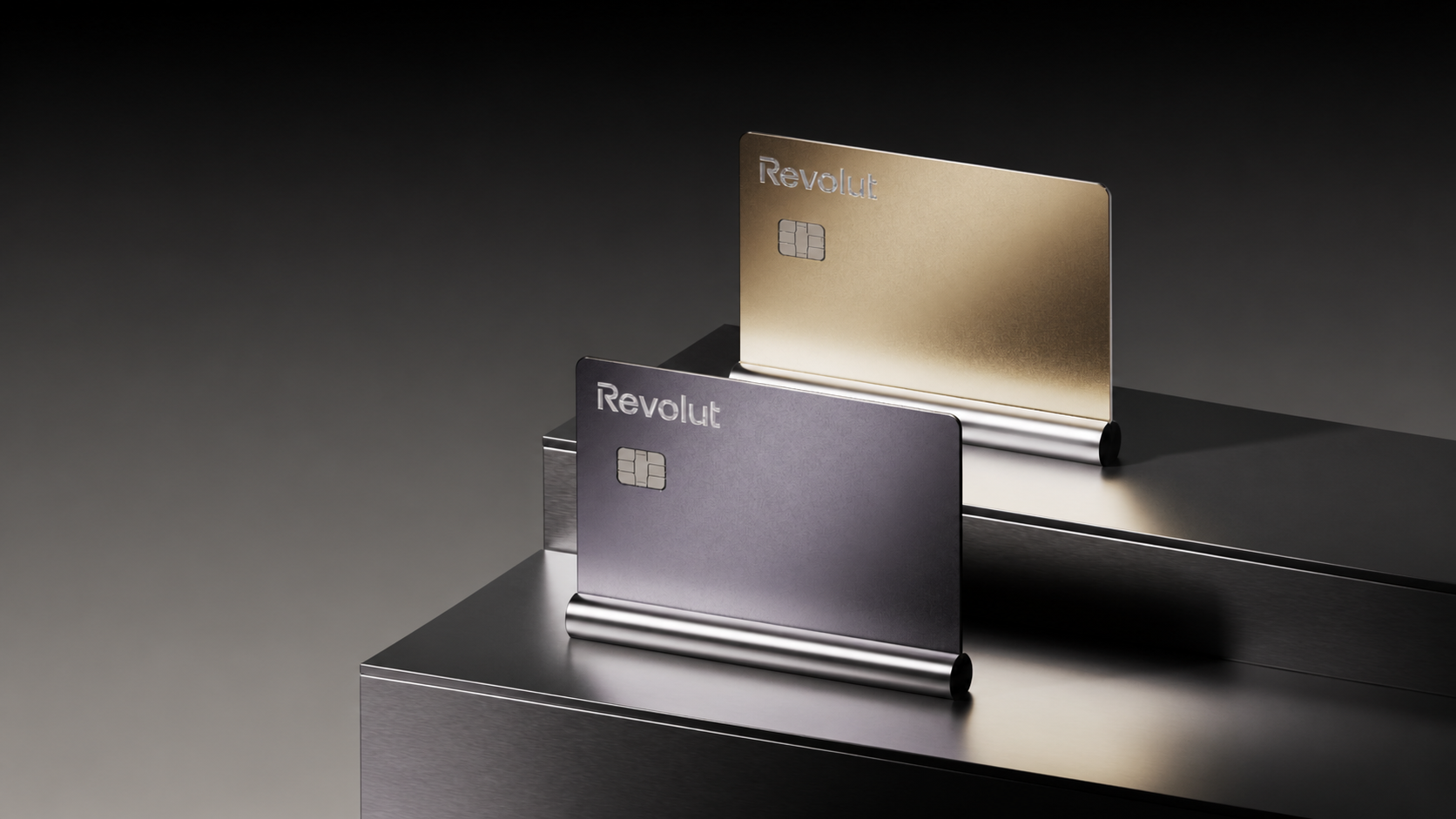
My Metal card was issued as a Mastercard World Elite debit card—the tier name is printed on the card. That designation makes little difference to ordinary payments, and I would not upgrade to Metal merely to get it. It can nevertheless unlock a small category of benefits that Revolut does not explain particularly well because they come from Mastercard rather than from the Revolut plan itself.
Mastercard describes World Elite as part of its premium World portfolio, with eligible cards potentially receiving ticket presales, preferred access and enhanced airport experiences. The word eligible matters. An individual promotion may accept every Mastercard, reserve better inventory for World Elite, or restrict access by issuing country and card number range. The logo on the card is therefore a reason to check an offer, not proof that every World Elite promotion will work. (Mastercard World Elite overview)
I encountered this when buying concert tickets for an event sponsored by Mastercard: my Revolut card gave me access to the Mastercard ticket opportunity. I no longer remember the specific concert well enough to name it, but the experience made me aware of this extra layer of card benefits. Mastercard has similar partnerships in which cardholders receive presale access, while some events give World and World Elite customers preferred seating or inventory. That is a niche benefit, but it can be genuinely valuable when the right event appears. (Example Mastercard concert access)
Italy provides another example. Mastercard’s current Italian Fast Track page lists Debit World Elite among the eligible premium tiers at participating airports, including Fiumicino, Venice, Linate, Bergamo, Olbia, Turin, Naples and Genoa. However, the current offer is limited to enabled banks and cards issued in Italy, and individual airport expiry dates vary. A Portugal-issued Revolut card should therefore not be assumed eligible merely because it says World Elite. I would check the current offer and validate the card before travelling. This Mastercard route is separate from buying a Fast Track pass inside Revolut. (Mastercard Italy Fast Track eligibility and current airports)
Customer support
Customer support was not a meaningful part of my Metal year. I did not have any memorable problems and did not need support often enough to judge whether the priority service was materially better. I therefore assign it no value rather than turning the absence of problems into a support recommendation.
Was Revolut Metal worth €124?
The price I am evaluating is the €124 I actually paid, not today’s headline price and not the sum of every theoretical benefit in Revolut’s marketing.
| Benefit | My use | Value I count |
|---|---|---|
| Travel insurance | Travel outside Europe once or twice a year | Around €100 per year in avoided standalone premiums, subject to comparable cover |
| Car-hire excess cover | Occasional rentals in Europe | Around €50–€100 per year in avoided separate rental cover |
| Headspace, Financial Times and NordVPN | Personally used | Real value, but count only what I would otherwise have paid |
| ClassPass | Used about monthly, normally spending 5–12 credits | Recurring value; occasionally paid for extra credits |
| 3 GB eSIM | Used in Switzerland | Useful convenience, available only near the end of my Metal year |
| RevPoints | Accumulated mainly for airline-mile transfers | Nice extra, not a reason to upgrade |
| Higher savings rate | Useful for convenient short-term savings | Nice extra; comparable rates exist elsewhere |
| Higher ATM and exchange limits | Rarely needed | Little personal value |
| Trading and crypto discounts | Not used | €0 |
| Perplexity / ChatGPT Go | Not used because I had higher tiers | €0 |
Current Metal and Ultra prices in Portugal
Revolut raised its Portuguese plan prices after I bought my Metal year. The current Portugal help pages list Metal at €17.99 per month or €175 per year, and Ultra at €55 per month or €595 per year, before Portugal’s 4% stamp duty. Paying annually therefore costs less than paying the monthly fee for twelve months. (Metal help page; Ultra help page)
| Plan | Monthly price | 12 monthly payments | Annual price | Saving with annual billing |
|---|---|---|---|---|
| Metal | €17.99 | €215.88 | €175 | €40.88, or about 18.9% |
| Ultra | €55 | €660 | €595 | €65, or about 9.8% |
The percentage discount is unchanged after stamp duty. Including 4%, Metal is approximately €18.71 per month or €182 per year; twelve monthly payments total about €224.52, so annual billing saves about €42.52. Ultra is €57.20 per month or €618.80 per year; twelve monthly payments total €686.40, so annual billing saves €67.60. (Metal product terms and tax disclosure; Ultra product terms and tax disclosure)
The stamp duty is a second reason today’s price looks higher than the one I paid. After Revolut began serving migrated customers through its Portuguese branch and local PT IBANs, its paid plans became Portuguese package-account maintenance fees subject to 4% stamp duty. This is a tax collected on top of Revolut’s stated base fee, not an extra benefit or a hidden Revolut margin. The increase is noticeable but does not change my basic conclusion: Metal can still be good value when somebody is already planning to use the insurance, ClassPass and a few included subscriptions.
There is one irritating caveat. At this fact-check, Revolut’s public Metal landing page still displayed an older €155 annual figure, while its help page and newer fee documents showed €175. I have used €175 for the comparison above. Because I am now on Ultra, I cannot see a live Metal renewal offer in my own app; a prospective buyer should confirm the final price shown before payment. My own €124 Metal year was a historical promotional price, not the current list price.
Annual plan gifts can be cheaper—but the discount is not guaranteed
Revolut also allows eligible customers to gift a one-year paid plan to a trusted Revolut friend. The recipient must expose their plan to friends in the privacy settings, and the sender can gift only the same plan or a higher one. Revolut defines a trusted contact as somebody whose number is saved and who has already exchanged at least one Revolut payment with the sender. (Paid-plan gift rules; how to send a plan gift)
Discounted gift offers sometimes appear in the app and can lower the annual cost substantially. A friend may see a discounted plan they can gift you, and you may separately see an offer you can gift them. However, this is not a permanent published discount: the feature and price are account- and location-dependent, and Revolut’s standard gift terms promise only that the price will be shown before payment. I would compare the sender’s in-app gift price with the recipient’s own annual renewal price rather than assume either account has the better offer.
There are also timing consequences. A gift of the same plan normally starts after an existing annual subscription ends; a higher gifted plan starts immediately and the unused portion of the old annual subscription is refunded. Once the recipient claims a gift, the sender can no longer cancel it for a refund. Those rules make it worth checking both accounts and the renewal date before buying. (Paid-plan gift rules)
The main travel concerns I would keep in mind
The recurring concerns in traveller discussions are less about card spending and more about relying on benefits without reading their conditions:
- Insurance eligibility is narrower than “Metal includes insurance.” The trip generally needs to be paid through Revolut, the plan must remain active, and Metal’s cover stops after 30 days.
- Rental-car cover is excess protection, not primary vehicle insurance. A rental company may also insist on a credit card for its security deposit; the Revolut Metal card is a debit card, so I would confirm the rental desk’s rules and carry a separate credit card if required.
- Revolut does not handle travel claims. XCover does, which adds another company and account to the process. User reports include both successful claims and frustrating document-heavy experiences, so I would not promise frictionless reimbursement without making a claim myself.
- The included eSIM prioritises convenience over the lowest possible price. Experiences reported online are mixed, with some travellers connecting immediately and others needing to adjust APN settings.
- No traveller should depend on one card or account. Online reports of security reviews and temporary account restrictions do not establish how frequently they happen, but the consequence abroad is serious enough to justify carrying a second bank card and some emergency funds.
These concerns do not cancel the value I received. They define the conditions under which I am comfortable relying on it. (Revolut insurance overview; car-hire excess conditions; traveller discussion about backup payment methods; mixed eSIM experiences)
Why I upgraded to Ultra instead of renewing Metal
At the end of my Metal year, Revolut offered me one year of Ultra for a final price of €433. I accepted it. Against the current tax-inclusive annual list price of €618.80, that is about 30% less.
That was €309 more than I had paid for the previous year of Metal, but it was also a promotional Ultra price rather than a clean comparison between the normal prices of the two plans. Both €124 and €433 are the final amounts I was charged. I am mentioning the upgrade because it is the honest end of this Metal review, not because it proves Ultra is better.
The next review starts here. I will track what I actually use on Ultra—particularly subscriptions, eSIM data, RevPoints, Fast Track and insurance—and compare the result with this Metal year. Until then, I have an upgrade decision, not an Ultra verdict.
What I would choose today
I would buy Metal again at the €124 price I paid if my travel pattern stayed the same. My strongest recommendation is for somebody who already buys travel or rental-car cover and can name one to three included subscriptions they will genuinely use.
I would not recommend it to somebody who is attracted mainly by the metal card, RevPoints, higher limits, trading discounts or the possibility of using the subscriptions someday. The value comes from replacing existing costs, not from adding up every retail price on Revolut’s list.
Review details
How this review was made
The purchase, testing period and commercial context behind the conclusions.
Purchase
- Product
- Revolut Metal personal plan in Portugal
- Paid by me
- Yes, €124 final price for one year
Testing
- Review period
- August 2025 to August 2026
- Account history
- Revolut Standard user since 2016
- After the review
- Upgraded to Ultra through a €433 final-price annual promotion
Disclosure
- Affiliate relationship
- None at the time of drafting
- Last checked
- 28 August 2026