

In this guide
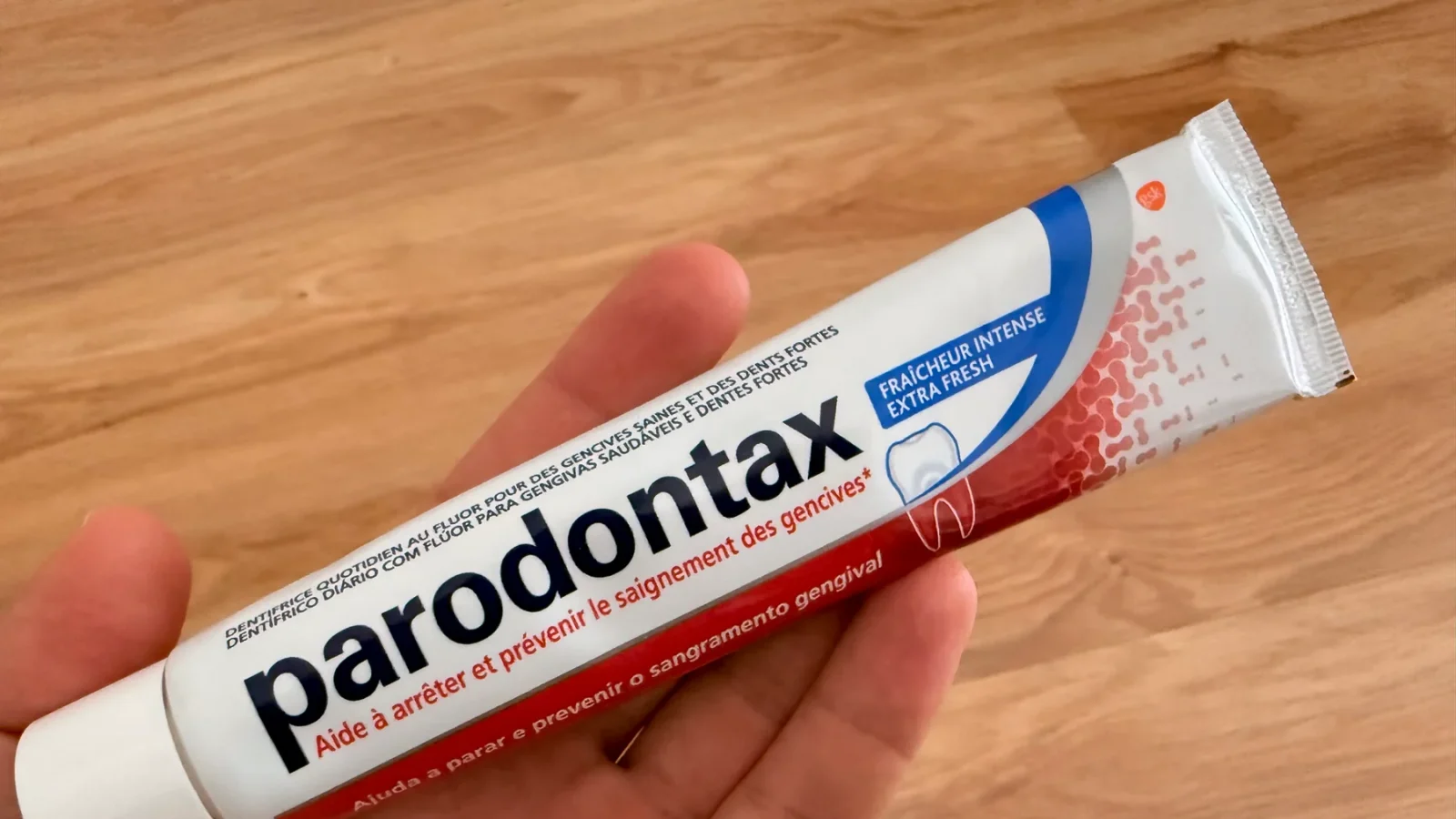
I still have one tube of the old Parodontax tucked away. At this point, it is basically memorabilia: evidence that Parodontax used to be salty, herbal and genuinely strange on purpose.
It was always an acquired taste. The first few times felt a little like brushing with a savoury herbal paste. Then ordinary toothpaste started tasting absurdly sweet by comparison. What has proved even harder to replace is the freshness. The old Extra Fresh Parodontax felt intensely fresh without becoming a blast of sweet artificial mint, and none of these alternatives matches it perfectly.
Unfortunately, Parodontax changed. The newer versions I tried were much foamier, and the taste had lost almost everything I liked about the old formula. Some current variants also contain sodium lauryl sulfate, although this varies by product and country. For example, the current German Complete Protection Extra Fresh lists SLS, while the Austrian Original formula does not. Always check the tube you are actually buying. (Complete Protection ingredients; Austrian Original ingredients)
So I started looking for replacements.
I have personally used five of the toothpastes in this guide. The sixth, Dr. Hauschka Saltwater Sensitive, is an untested research pick that kept appearing during my search and looks promising enough to mention—but I am not going to pretend that reading an ingredient list is the same as putting something in your mouth twice a day.
The short answer
MARA EXPERT Paromed is the closest replacement I have found for the old Parodontax. It is salty, herbal, low-foaming, SLS-free and contains 1,450 ppm fluoride. Even its ingredient list looks like someone used the old Parodontax formula as a starting brief. Its main weakness is freshness: it does not have quite the same clean, lingering lift as the old Extra Fresh Parodontax.
Weleda Saline is the next closest overall—and the closest in freshness. It is easier to find across Europe and recreates much of the salty, herbal experience. The trade-offs are a grainier texture, even less foam and no fluoride.
The other three toothpastes I tested—Couto, Arthrodont Fraîcheur Intense and Marvis Classic Strong Mint—are not true Parodontax replacements. They belong here because they solve a related problem: they taste strong and minty without tasting like liquid sweets.
The comparison
| Toothpaste | Tested by me? | Salty? | Fluoride | SLS | My verdict |
|---|---|---|---|---|---|
| MARA EXPERT Paromed | Yes | Yes | 1,450 ppm | No | Closest replacement overall |
| Weleda Saline | Yes | Yes | None | No surfactants | Best widely available alternative |
| Dr. Hauschka Saltwater Sensitive | No—research pick | Yes | None | No surfactants | Promising, especially if you dislike mint |
| Couto Original | Yes | No | None | Contains a sulfate detergent | Excellent medicinal mint, but a different category |
| Arthrodont Fraîcheur Intense | Yes | No | None listed | No SLS | Strong natural mint with moderate foam |
| Marvis Classic Strong Mint | Yes | No | Varies by market | Yes | Excellent flavour, conventional formula |
Formulas can vary between countries and change over time. The table reflects the product information available when this guide was last checked, so confirm the packaging before buying.
What made the old Parodontax so distinctive?
The old formula combined a large amount of sodium bicarbonate with chamomile, echinacea, sage, rhatany, myrrh and peppermint. It was salty, earthy, slightly medicinal and relatively low-foaming. A documented 2019 ingredient list shows that unusual combination clearly, and an earlier clinical description records the same six-herb family with sodium bicarbonate and approximately 1,400 ppm fluoride. (Archived formula analysis; published formula description)
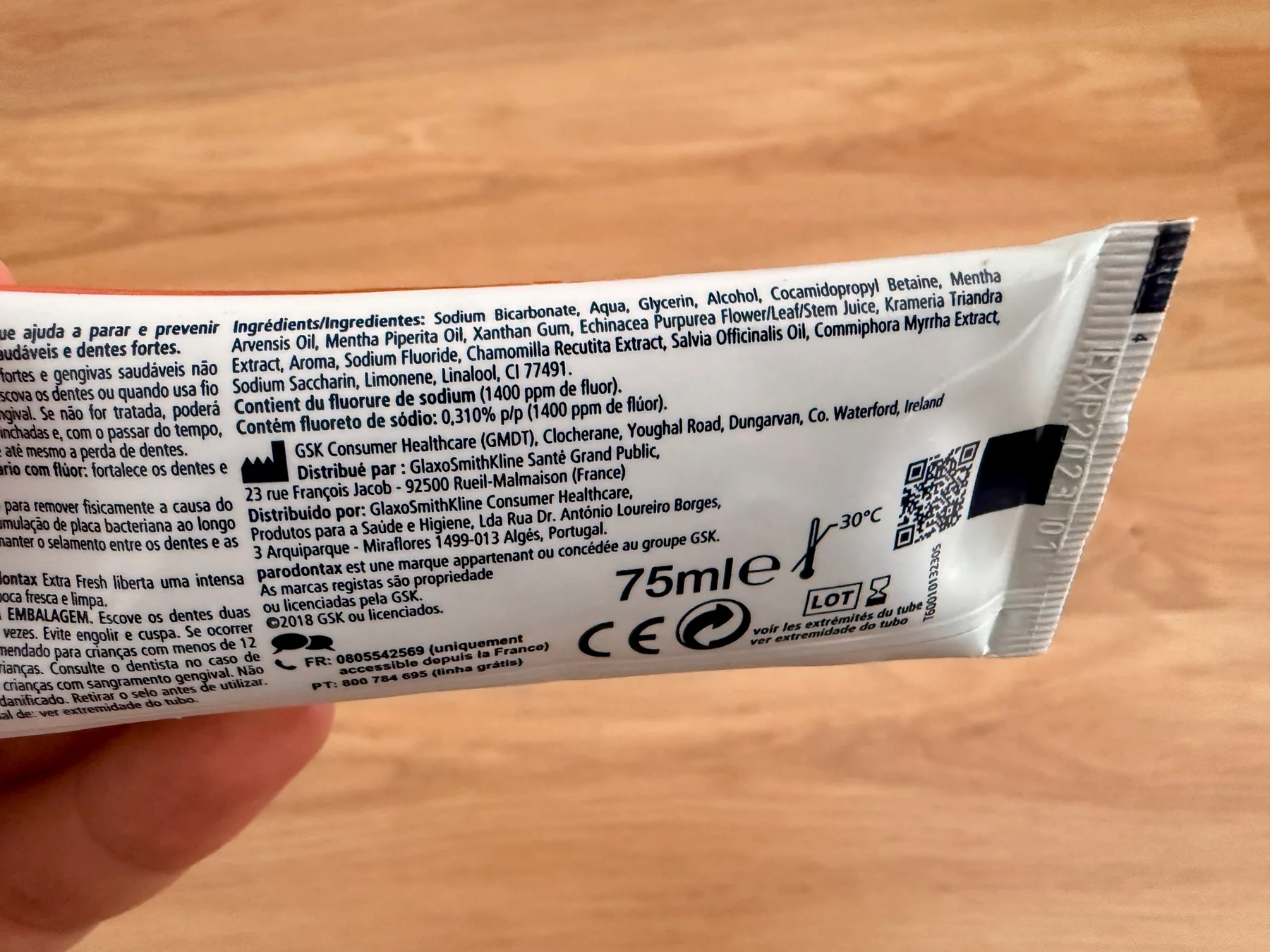
That distinction matters. Plenty of toothpastes contain baking soda. Very few combine the saltiness, herbal bitterness, restrained sweetness and low foam that made old Parodontax taste like old Parodontax.
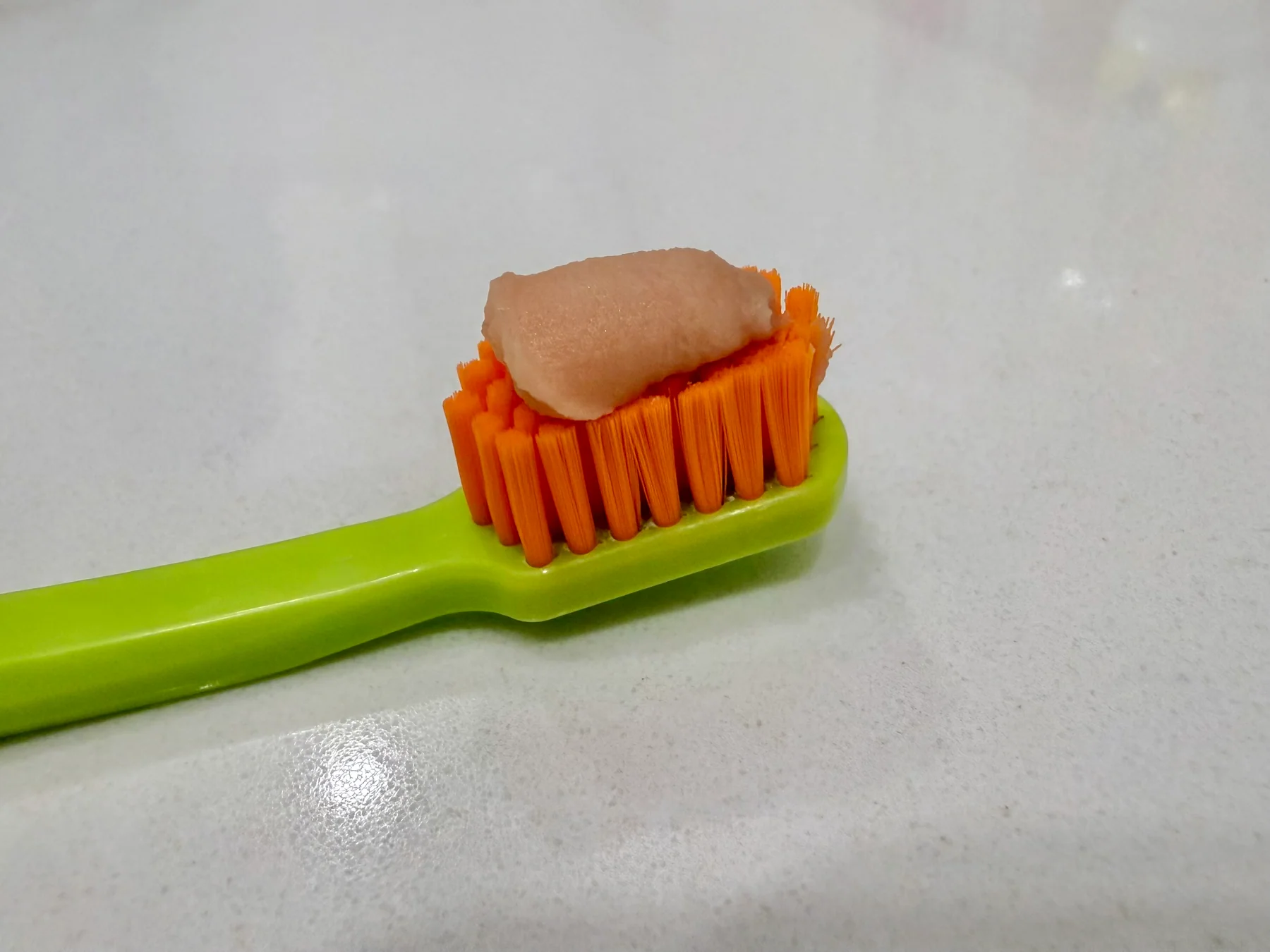
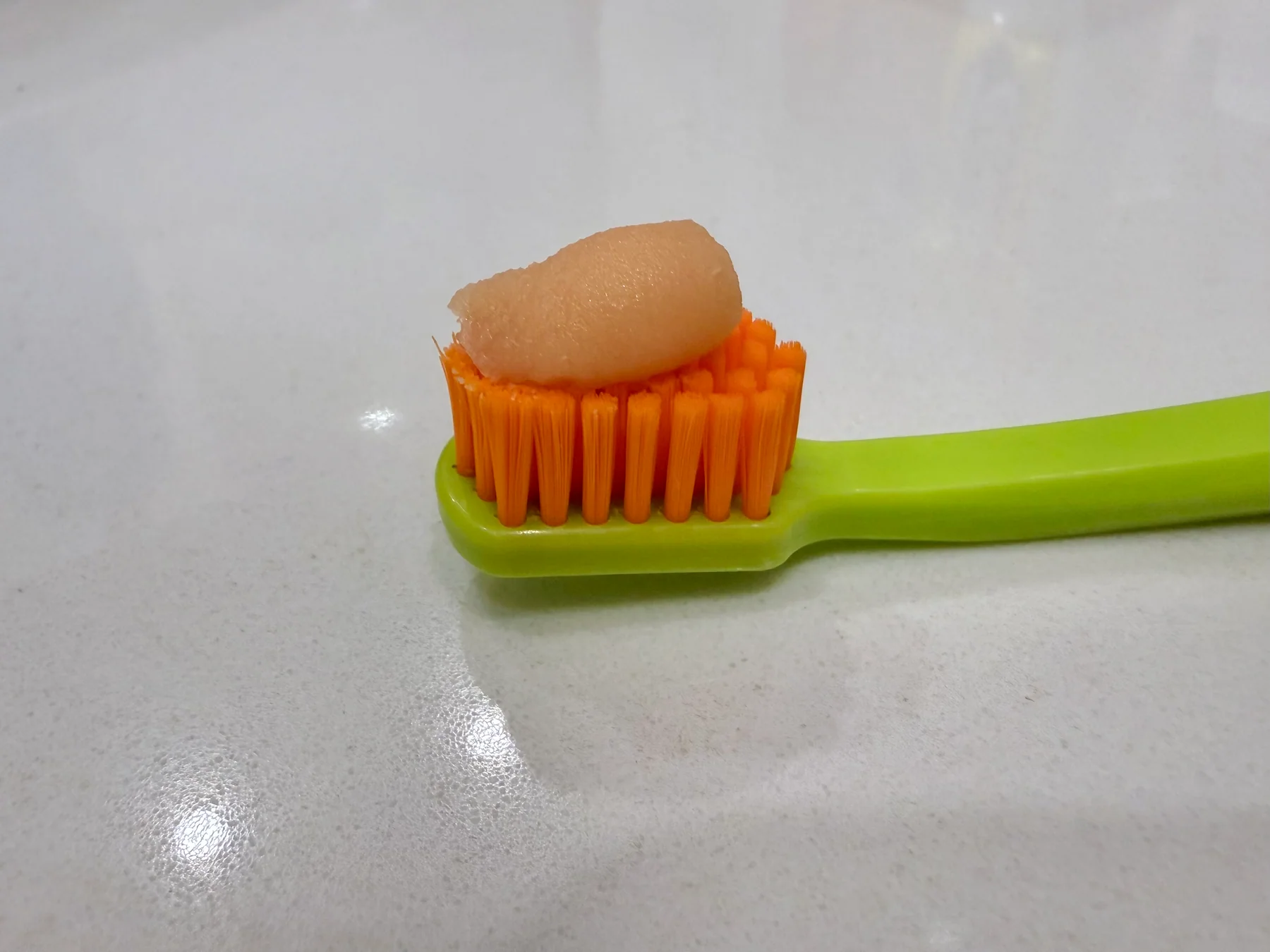
People have been trying to replace it for years. There is an extensive Dutch Tweakers discussion about the changed formula, while one particularly precise Reddit request asks for a salty herbal toothpaste with fluoride, no SLS and European availability. That is essentially the brief for this guide.
Why SLS is part of this discussion
Sodium lauryl sulfate is a detergent used to make toothpaste foam and help disperse material during brushing. It is also one of the reasons some dentists, oral-medicine researchers and patients prefer gentler or SLS-free formulas—particularly for people whose mouths are already dry, sore or prone to ulcers.
This does not mean SLS toothpaste is universally unsafe. Most people use it without an obvious problem, and “SLS-free” does not automatically mean irritation-free: flavours, essential oils and alternative surfactants can also cause reactions. The American Dental Association lists SLS among toothpaste ingredients reported as contact irritants and notes that possible symptoms can include redness, swelling, peeling and ulceration of the oral tissues.
The most relevant evidence concerns recurrent aphthous ulcers, or canker sores. A 2019 systematic review found that SLS-free toothpastes reduced ulcer numbers, duration, episodes and pain compared with SLS-containing toothpastes. But the review included only four crossover trials with 124 participants and explicitly called for better studies. A later scoping review likewise described possible mucosal peeling, irritation and inflammation, while characterising the evidence for an SLS-free benefit as limited.
In practice, this is a tolerability question rather than a clean good-versus-bad verdict. NHS guidance recommends low-foaming SLS-free toothpaste for some people with dry mouth, swallowing difficulties or other vulnerable oral conditions, while still recommending an appropriate fluoride concentration. (Dorset County Hospital guidance) For this guide, I treat SLS status as useful information—not proof that one toothpaste is automatically healthier than another.
The closest replacements for old Parodontax
#1 · Closest replacement
MARA EXPERT Paromed
The one to buy if what you miss is specifically the old salty, herbal Parodontax.
Paromed is the closest replacement I have found, and it is not close in the polite runner-up sense. It is almost unnervingly similar.
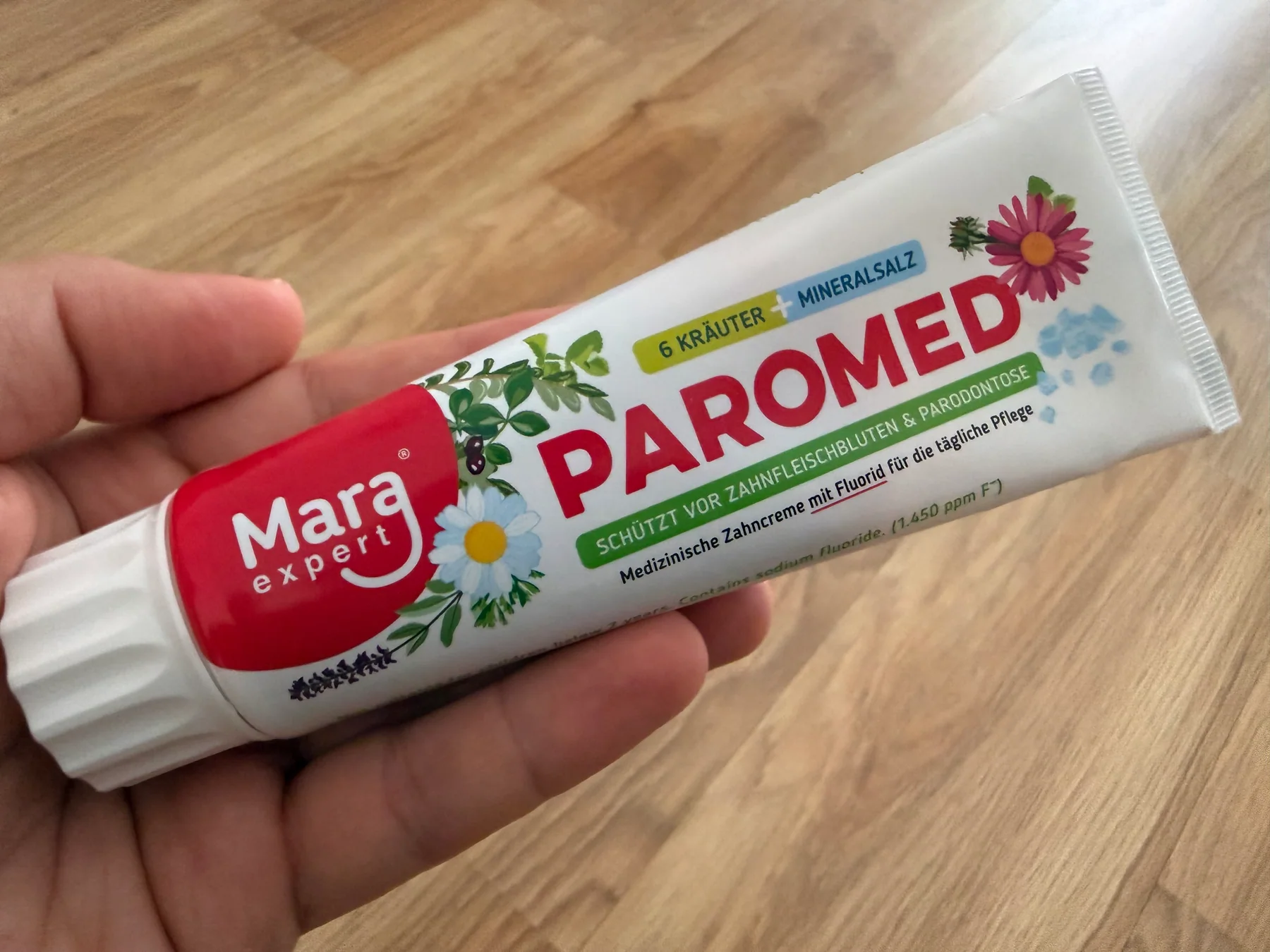
The taste has the same salty, herbal shape as old Parodontax. It does not explode into foam, and it does not leave the sweet artificial aftertaste that sent me looking for alternatives in the first place. If you remember the old toothpaste fondly, Paromed feels familiar almost immediately.
The difference is freshness. Paromed is fresh enough, but it is not as fresh as the old Extra Fresh Parodontax and does not leave quite the same lingering clean feeling. It wins because the complete flavour profile is so similar—not because it perfectly recreates every part of the experience.
The resemblance also makes sense on paper. According to Rossmann’s current product information, Paromed contains 67% mineral salt, with sodium bicarbonate first in the ingredient list, plus six herbs—echinacea, myrrh, rhatany, chamomile, sage and mint—and 1,450 ppm sodium fluoride. The ingredient list uses cocamidopropyl betaine rather than SLS. MARA EXPERT’s product page provides the same basic formulation.
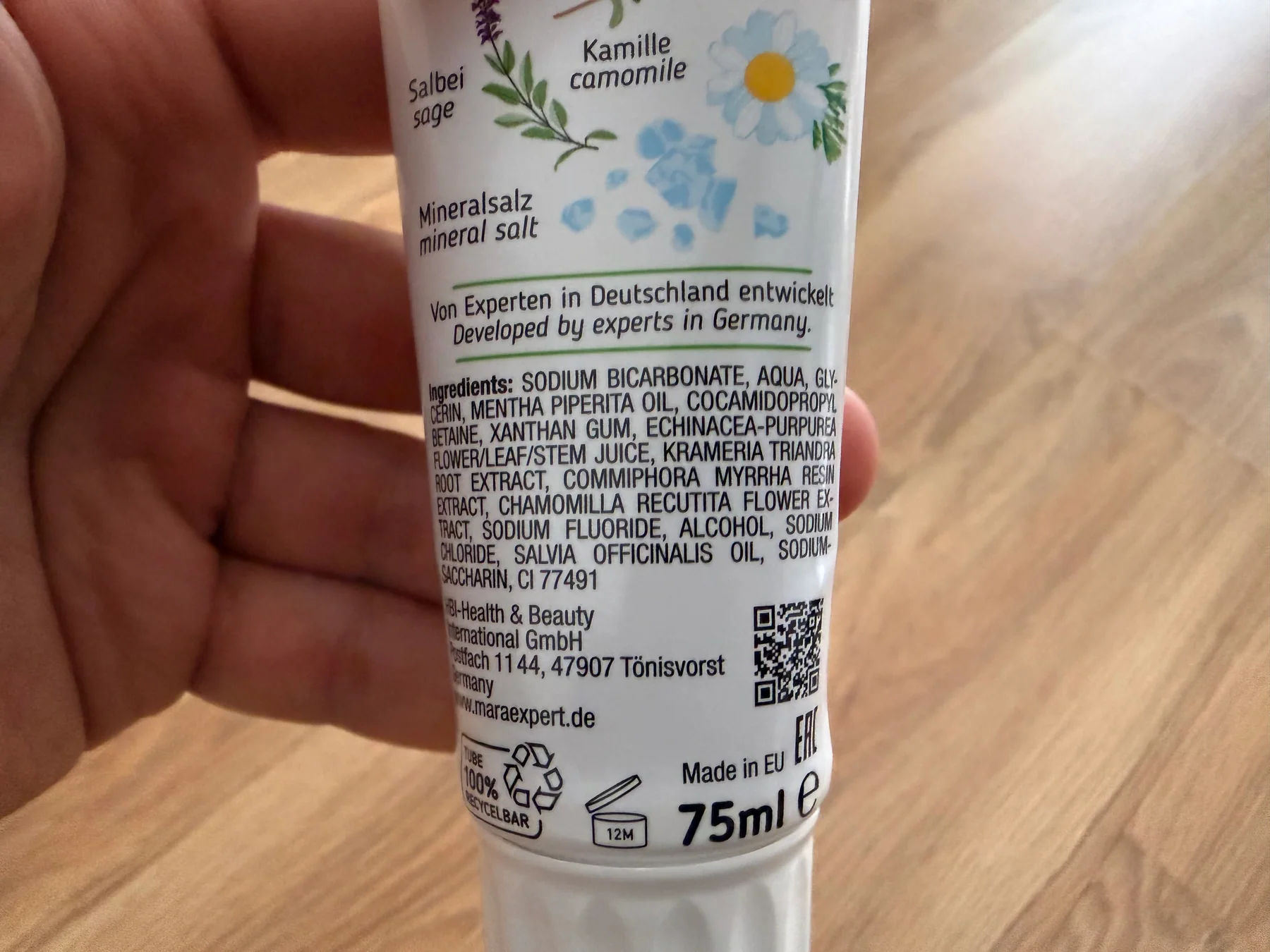
This is also the replacement most consistently endorsed by other former Parodontax users. People in the long-running Tweakers thread describe it as nearly identical, and a newer Reddit discussion about fluoride-containing alternatives reaches much the same conclusion.
What I like
- By far the closest match in flavour.
- Salty and herbal without becoming unpleasantly sweet.
- Much less foamy than the newer Parodontax variants I tried.
- SLS-free.
- Contains 1,450 ppm fluoride, unlike most of the credible salty alternatives.
What I do not like
- Availability outside Germany and Austria is patchy.
- Not as fresh as the old Extra Fresh Parodontax.
- Marketplace sellers can charge several times the normal German drugstore price.
- The online review sample is enthusiastic but still relatively small.
- It contains cocamidopropyl betaine and saccharin, which some readers may prefer to avoid.
In Germany, Paromed is normally sold by retailers such as DM and Rossmann. Before paying an inflated import price, check whether either retailer—or a German pharmacy—will deliver to your country.
#2 · Widely available alternative
Weleda Saline
A recognisably salty, herbal experience with a grainier texture and one major caveat: no fluoride.
Weleda Saline was the first convincing alternative I found. It gets much closer to the old Parodontax experience than most “natural” toothpastes because it is properly salty, herbal and almost entirely foam-free.
Of everything I tested, Weleda comes closest to the old Parodontax freshness. It is a little mintier, with a cleaner, brighter finish than Paromed. The texture is noticeably grainier, however, and because it contains no surfactants it produces even less foam. Neither difference ruins it, but they stop it from being the near-copy that Paromed is.
The official Weleda formula contains sodium bicarbonate, sea salt, silica, peppermint, myrrh, rhatany and horse chestnut. It contains no surfactants and no fluoride.
Online reviews are unusually consistent for such a polarising product. Across Holland & Barrett and Ecco Verde, people praise the low foam and clean feeling, while the negative reviews mostly object to the saltiness, unusual consistency or occasional separation. In other words: the features are not in dispute. Whether you enjoy them is another matter.
What I like
- Genuinely salty rather than merely “contains baking soda.”
- The closest match I found for the old fresh feeling.
- Herbal and minty without tasting sugary.
- No SLS and no foaming surfactants at all.
- Easy to find across much of Europe and also sold in the UK and US.
- Leaves a very clean, smooth feeling.
What I do not like
- It contains no fluoride.
- The paste is grainier than old Parodontax and Paromed.
- Peppermint is more prominent.
- The texture can become runny or separate inside the tube.
- The metal tube and tiny cap are mildly annoying.
Research pick · Salty and foam-free
Dr. Hauschka Saltwater Sensitive
The most credible additional salty option I found, but it remains a research suggestion rather than a recommendation.
I have not used this one, so it does not get the same recommendation as Paromed or Weleda. I am including it because the formula and review pattern make it the most credible additional salty toothpaste I found.
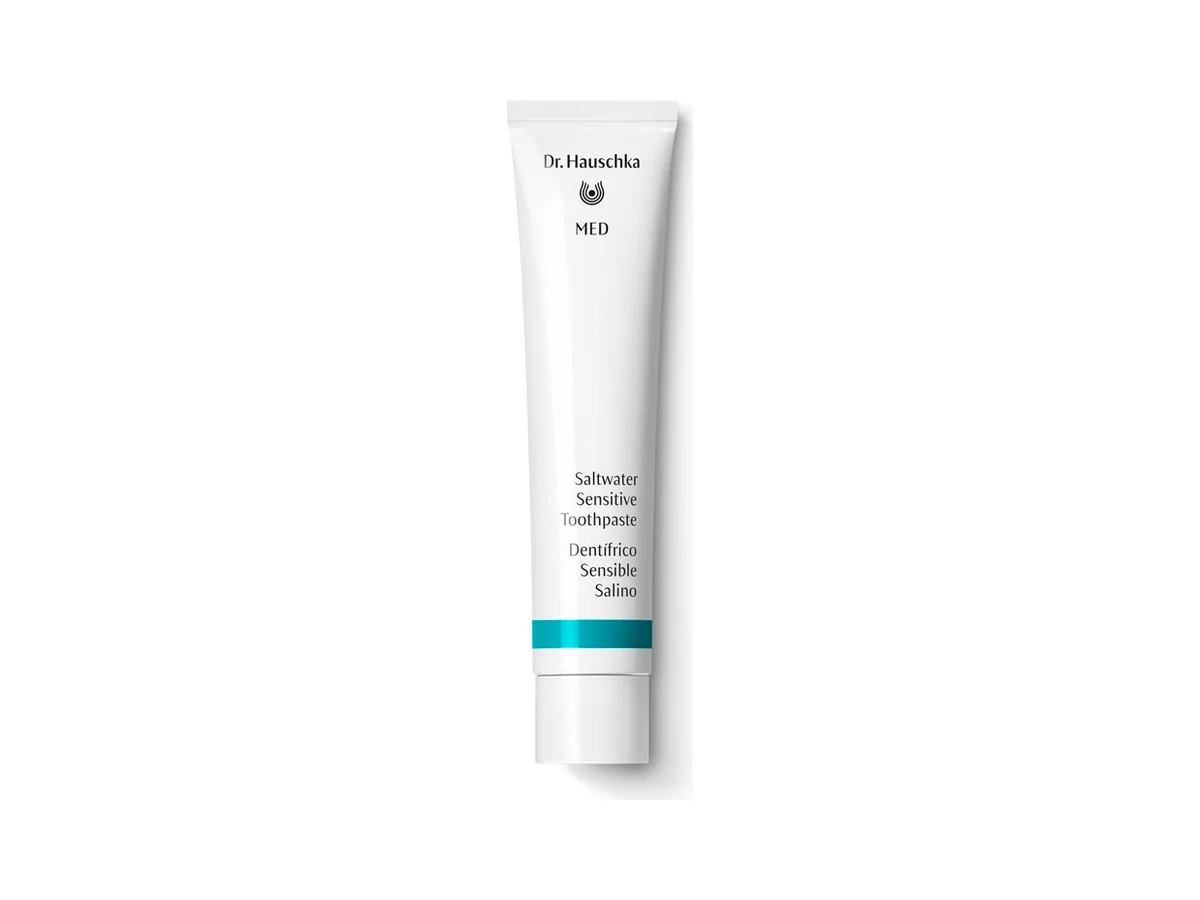
Dr. Hauschka Saltwater Sensitive combines mineral water, sea salt, calcium carbonate, silica, witch hazel and citrus oils. It contains no added fluoride, surfactants, peppermint or menthol. The result should be salty and herbal, but more lemony than minty. Dr. Hauschka’s product information confirms the saltwater base and absence of fluoride and surfactants.
The most interesting review came from a former Parodontax user on the Dutch Dr. Hauschka product page, who described it as a good salty replacement. Other reviews praise its gentle, foam-free cleaning, although the sample is much smaller than Weleda’s.
Why it looks promising
- Properly salty and completely foam-free.
- No sweet conventional mint flavour.
- May suit people who find Weleda’s peppermint too strong.
- Specifically designed for sensitive teeth and gums.
Why I am cautious
- I have not personally tested it.
- It contains no fluoride.
- The lemon, anise and herbal profile is probably less faithful to old Parodontax.
- It has a much smaller independent review base.
Not salty, but strong, natural and not too sweet
The following toothpastes do not taste like old Parodontax. I am including them because they share one quality I increasingly care about: they taste like adult oral-care products, not mint-flavoured icing.
All three are white, smooth pastes with strong mint or medicinal flavours. If what you really miss is the lack of sweetness rather than the literal salt, these may be more useful than another baking-soda toothpaste.
Best medicinal mint
Couto Original
A Portuguese classic for people who want concentrated, grown-up freshness rather than a literal Parodontax replacement.
Couto is a Portuguese classic with a concentrated peppermint, menthol, anise, clove and thymol character. It is not salty, but it is dry, medicinal and emphatically not confectionery-like.
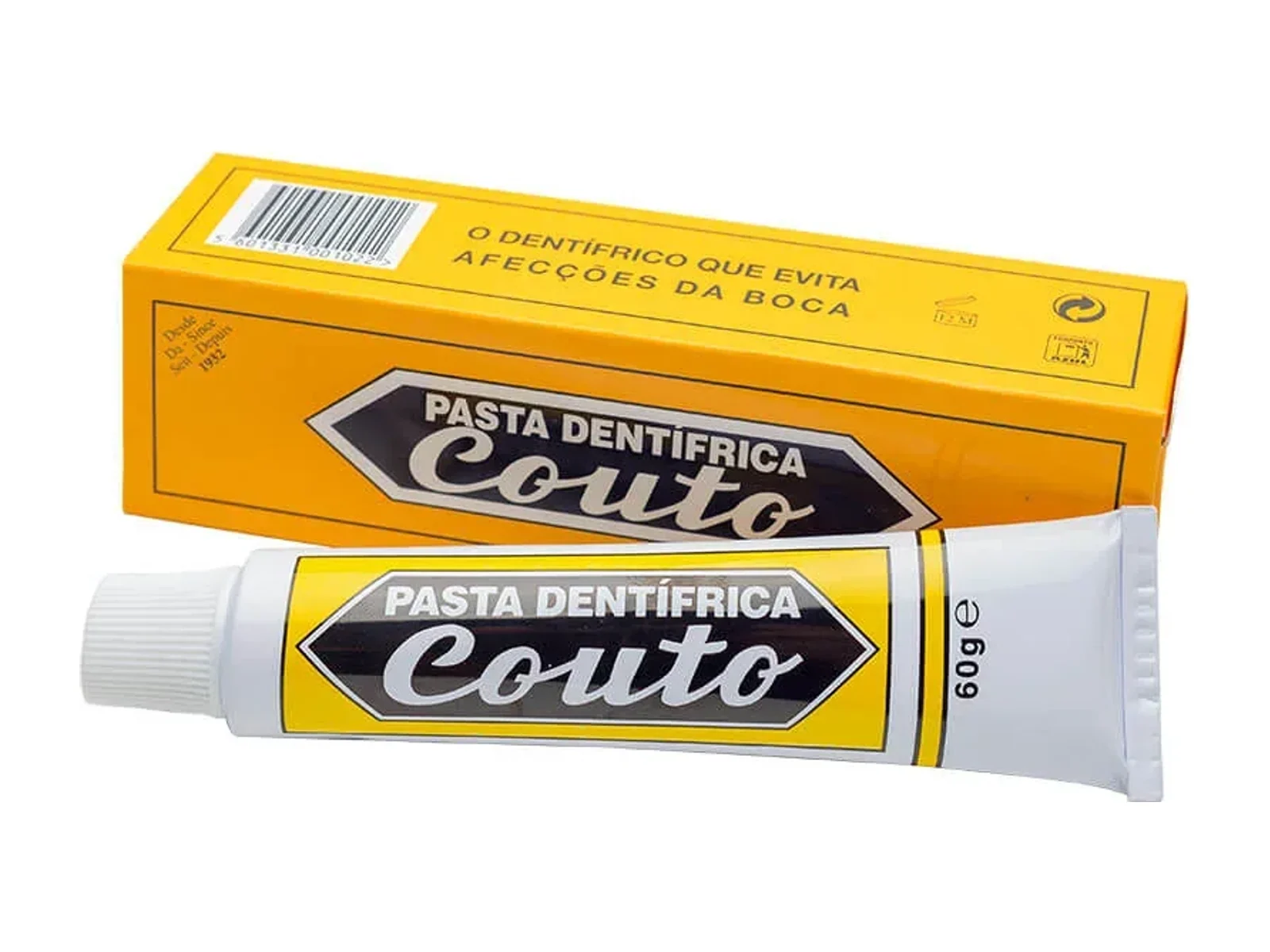
The texture is smooth and white. The flavour feels old-fashioned in the best possible way—something from a pharmacy cabinet rather than a focus group.
The official Couto formula contains hydroxyapatite but no fluoride. It also contains a C12–18 alkyl sulfate detergent, so it should not be described as an SLS-free-style or foam-free alternative. The amount of hydroxyapatite is not disclosed.
What I like
- Strong, natural-feeling medicinal freshness.
- Very little perceived sweetness.
- Smooth white texture.
- Concentrated and inexpensive in Portugal.
- A genuinely distinctive product with a loyal following.
What I do not like
- Original Couto contains no fluoride.
- It is not salty and does not resemble the old Parodontax formula.
- It contains a sulfate detergent.
- Import prices can be silly for a toothpaste that costs very little in Portugal.
Couto also sells a separate fluoride version containing 1,450 ppm fluoride. It is a different formulation and should be treated as a separate product rather than a drop-in replacement for the Original.
Best botanical mint
Arthrodont Fraîcheur Intense
Strong, layered mint with a botanical finish and less foam than a typical supermarket toothpaste.
Arthrodont Fraîcheur Intense sits in roughly the same flavour family as Couto, although it feels more modern. Peppermint and menthol provide the initial coldness, while anise, eugenol and liquorice-derived glycyrrhetinic acid give it a more botanical, slightly medicinal finish.
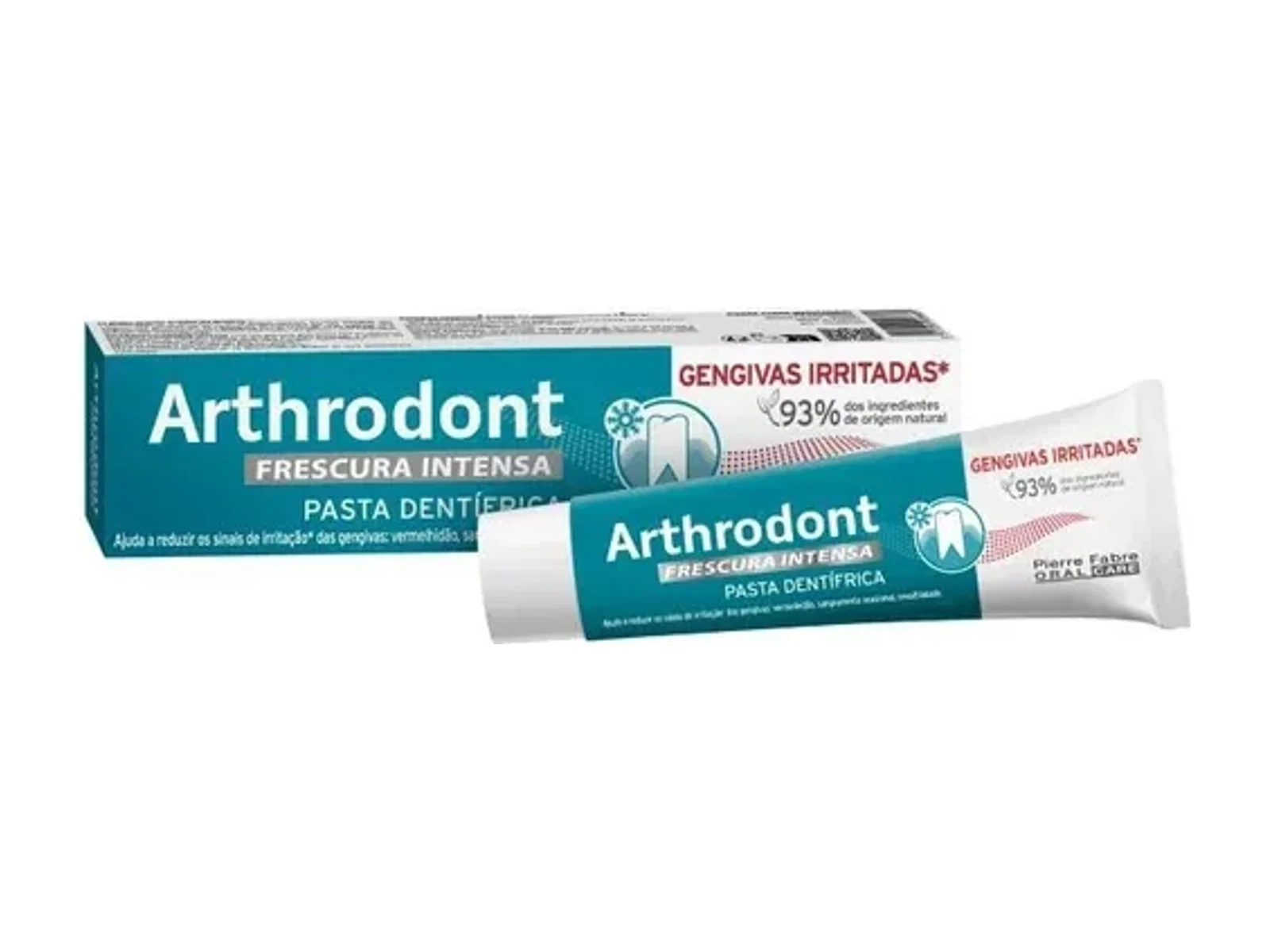
It is a smooth white paste, strong without becoming sweet, and less foamy than a typical supermarket toothpaste.
According to Pierre Fabre’s current formula, it does not contain SLS, although it does contain other surfactants as well as cetylpyridinium chloride. I could not find fluoride in the listed ingredients.
Retailer ratings are very positive, but many visible reviews were collected through gifted-product campaigns. That does not make them worthless; it does mean I would not treat the headline average as independent proof of anything. Cocooncenter’s review page makes the sourcing of many reviews visible.
What I like
- Strong, layered mint rather than simple sweet mint.
- Smooth white texture.
- SLS-free and moderately foamy.
- Long-lasting clean feeling.
- More widely available through European pharmacies than Couto is outside Portugal.
What I do not like
- It is not salty and contains no sodium bicarbonate.
- No fluoride appears in the current ingredient list I found.
- Much of the public review corpus is incentivised.
- Essential oils and cetylpyridinium chloride may not suit every sensitive mouth.
Best conventional option
Marvis Classic Strong Mint
The polished, easy-to-find choice when flavour matters more than recreating old Parodontax.
Marvis Classic Strong Mint is the most conventional toothpaste in this guide, but it earns its place through flavour. It is crisp, concentrated and considerably less childish than many standard mint toothpastes.
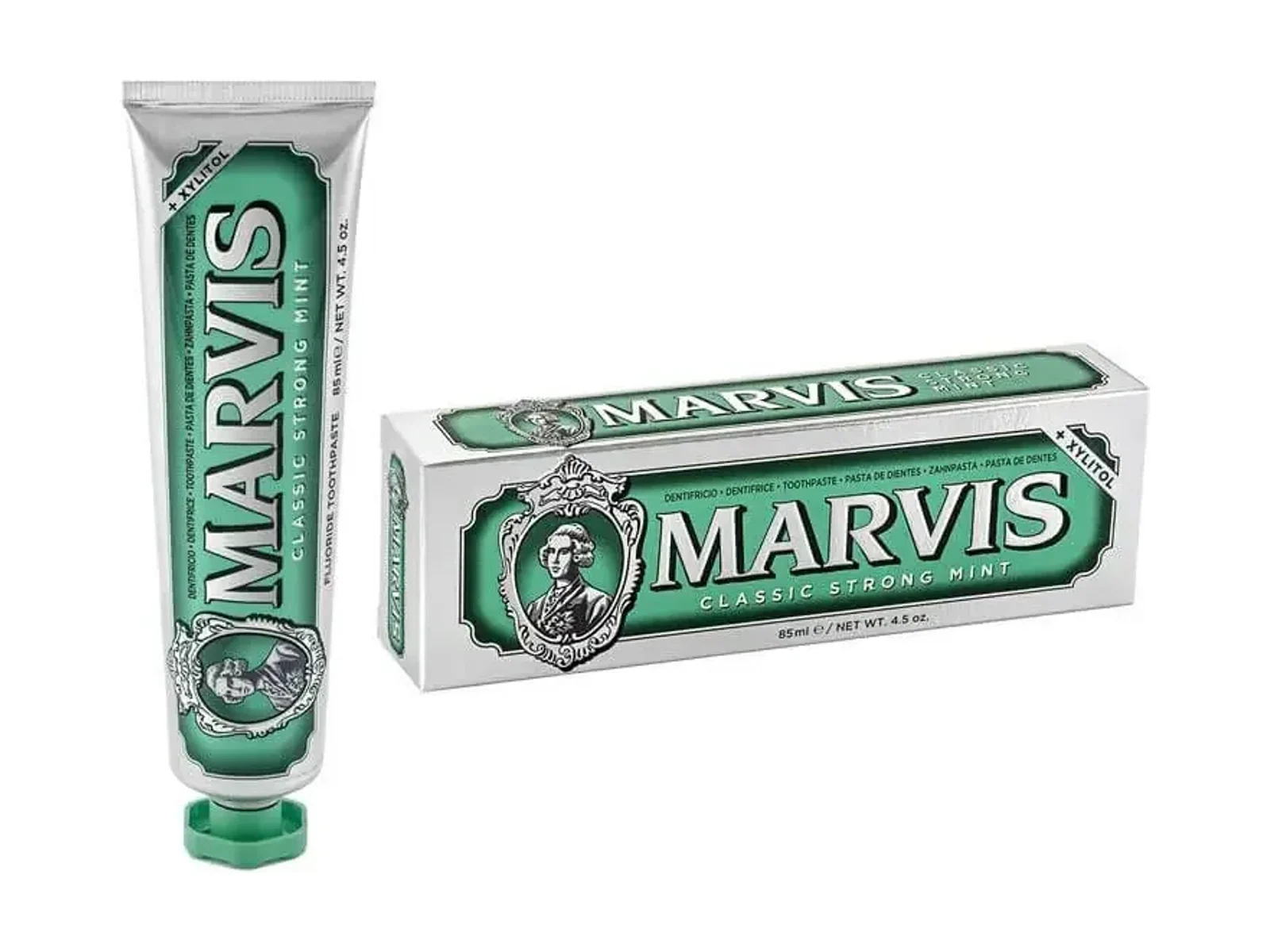
The formula combines peppermint, menthol, anethole and supporting citrus notes. It tastes strong and clean, although it does not have the salt, herbs or low foam that defined old Parodontax.
The official Marvis ingredient list includes SLS, saccharin and sodium fluoride. Fluoride concentration appears to vary between markets and packs: one European retailer listing specifies 0.2% sodium fluoride, while Altroconsumo’s tested pack contained 1,130 ppm. Check the specific tube rather than assuming every version is identical.
Reviews across Skroutz and Cult Beauty consistently praise the flavour and lasting freshness. The recurring objections are equally predictable: it is expensive, foamy and arguably just a very nicely packaged conventional toothpaste.
What I like
- Excellent strong peppermint flavour.
- Less candy-like than most conventional mint pastes.
- Smooth texture and long-lasting freshness.
- Easy to find across Europe, the UK and US.
What I do not like
- Contains SLS and foams considerably more than old Parodontax.
- Fluoride concentration varies and may be below the usual adult recommendation.
- Expensive for a relatively conventional formula.
- Not salty or especially herbal.
Which one should you buy?
If you miss the old Parodontax specifically, buy Paromed. It is the only product I tested that feels like a genuine replacement rather than a loose interpretation.
Choose Weleda Saline if Paromed is unavailable and the absence of fluoride is not a deal-breaker. It is grainier and mintier, but the salty, herbal, low-foam experience is recognisable.
Consider Dr. Hauschka Saltwater Sensitive if you want something salty and completely foam-free without peppermint. I have not tested it, so this remains a research suggestion rather than a recommendation.
Choose Couto, Arthrodont or Marvis if the important part for you is strong, grown-up freshness without an overwhelmingly sweet taste. They are excellent in their own category; they just are not salty Parodontax replacements.
A note about fluoride and bleeding gums
Paromed is the only close old-Parodontax replacement in this guide that contains a standard adult concentration of fluoride. Weleda, Dr. Hauschka, Couto Original and the current Arthrodont formula I found are fluoride-free.
Because Shrug Lab readers may be shopping in the United States, the European Union or the UK, I checked the public-health and regulatory position in all three markets:
- United States — CDC: fluoride helps both adults and children prevent cavities, and the CDC advises brushing at least twice a day with fluoride toothpaste. It also describes fluoride dental products as safe and effective when used as directed. (CDC fluoride guidance)
- European Union — EFSA and EU law: EFSA’s 2025 safety update says correctly used topical fluoride oral-care products do not add to systemic exposure; its intake assessment therefore focused on swallowed fluoride. Separately, the EU Cosmetics Regulation limits the combined fluoride concentration permitted in oral products to 0.15% as fluoride and requires specific child-safety labelling for toothpastes containing 0.1–0.15%. That regulatory ceiling is not the same thing as an individual clinical recommendation. (EFSA safety update; EU Cosmetics Regulation)
- United Kingdom — NHS: adults are advised to use toothpaste containing at least 1,350 ppm fluoride, brush twice daily and spit rather than rinse immediately afterwards. (NHS toothbrushing guidance)
The practical conclusion is that choosing a fluoride-free toothpaste is a meaningful oral-health trade-off, not a detail that should be hidden beneath vague “natural” marketing. These references are broad population guidance rather than a personal prescription; a dentist can advise differently based on decay risk, age, local water fluoridation and other sources of fluoride exposure.
Toothpaste also is not a substitute for diagnosis or professional treatment. If your gums bleed persistently, are swollen or are receding, speak to a dentist rather than expecting a particular salty flavour to solve the underlying problem.
Frequently asked questions
What is the closest toothpaste to the old Parodontax?
MARA EXPERT Paromed is the closest replacement I have tested. Its salty herbal flavour, low foam, high sodium-bicarbonate content, six-herb blend and 1,450 ppm fluoride all make it unusually similar to the old formula.
Did Parodontax change its formula?
Yes. Formulas have changed at different times and in different markets, but many European users noticed a particularly dramatic change around 2020–2021. Long-running forum discussions document complaints that the new paste was sweeter and no longer had the old herbal taste. Current formulas still vary by country and product.
Why did old Parodontax taste salty?
The old paste contained a large amount of sodium bicarbonate alongside a distinctive blend of herbal extracts and oils. That combination produced the salty, earthy flavour and restrained sweetness people either loved or absolutely could not tolerate.
Does any current Parodontax taste exactly like the old one?
I have not found a current Parodontax variant that recreates the old experience. The product name “Original” does not necessarily mean the historic six-herb formula, and ingredients differ by country.
Is Paromed made by Parodontax?
No. Paromed is made by MARA EXPERT and is not affiliated with Parodontax. Its formula and taste are simply strikingly similar to the older product.
Does Paromed contain fluoride?
Yes. The current Paromed formula lists 1,450 ppm sodium fluoride, which meets the commonly recommended adult concentration.
Does Paromed contain SLS?
The current ingredient list does not contain sodium lauryl sulfate. It uses cocamidopropyl betaine as its surfactant.
Does Weleda Saline contain fluoride?
No. Weleda Salt/Saline Toothpaste is fluoride-free and contains no foaming surfactants.
Is SLS in toothpaste bad for your mouth?
Not necessarily. Most people tolerate SLS, but it can irritate the oral mucosa in some users and may aggravate recurrent aphthous ulcers. The evidence supporting SLS-free toothpaste is most relevant to people who already experience ulcers, dryness, peeling or soreness, not as proof that everyone needs to avoid SLS.
Is salty toothpaste better for your teeth or gums?
Saltiness is mainly a sensory characteristic, not proof that a toothpaste is more effective. Fluoride concentration, the complete formulation, brushing technique and consistent use matter more than whether the paste tastes salty.
What is the best toothpaste that is minty but not sweet?
Of the products I tested, Couto Original and Arthrodont Fraîcheur Intense have the most natural or medicinal mint character. Marvis Classic Strong Mint is smoother and more conventional but still much less candy-like than many mainstream toothpastes.
Final verdict
There are plenty of salty toothpastes and plenty of herbal toothpastes. Almost none of them reproduce the peculiar combination that made old Parodontax so good.
Paromed does—at least more closely than anything else I have tried. It wins on the complete salty, herbal flavour, although it still cannot match the old Extra Fresh version for freshness.
Weleda gets close enough to be a meaningful alternative, especially because it is easier to find, and it comes closest to reproducing that fresh feeling. Dr. Hauschka looks promising but remains untested. Couto, Arthrodont and Marvis solve a slightly different problem: they are strong, adult-tasting toothpastes for people who are tired of brushing with sweet mint foam.
For now, Paromed is the one I would buy when the last tube of old Parodontax finally becomes nothing more than memorabilia.