

In this guide
I did not set out to find the universally best training shoe. I was trying to solve a much narrower problem: find one shoe that lets my toes spread, does not squeeze my midfoot, feels stable when lifting and can still handle the occasional HYROX-style session.
That distinction matters because most lists of “wide gym shoes” mix together three very different things:
- shoes with a roomy toe box;
- shoes sold in a genuine wide size;
- ordinary shoes that reviewers happen to find spacious.
Those are not interchangeable. I have already tried solving a width problem by buying a longer shoe. It usually leaves me with extra space in front of my toes while the part that actually feels tight remains tight.
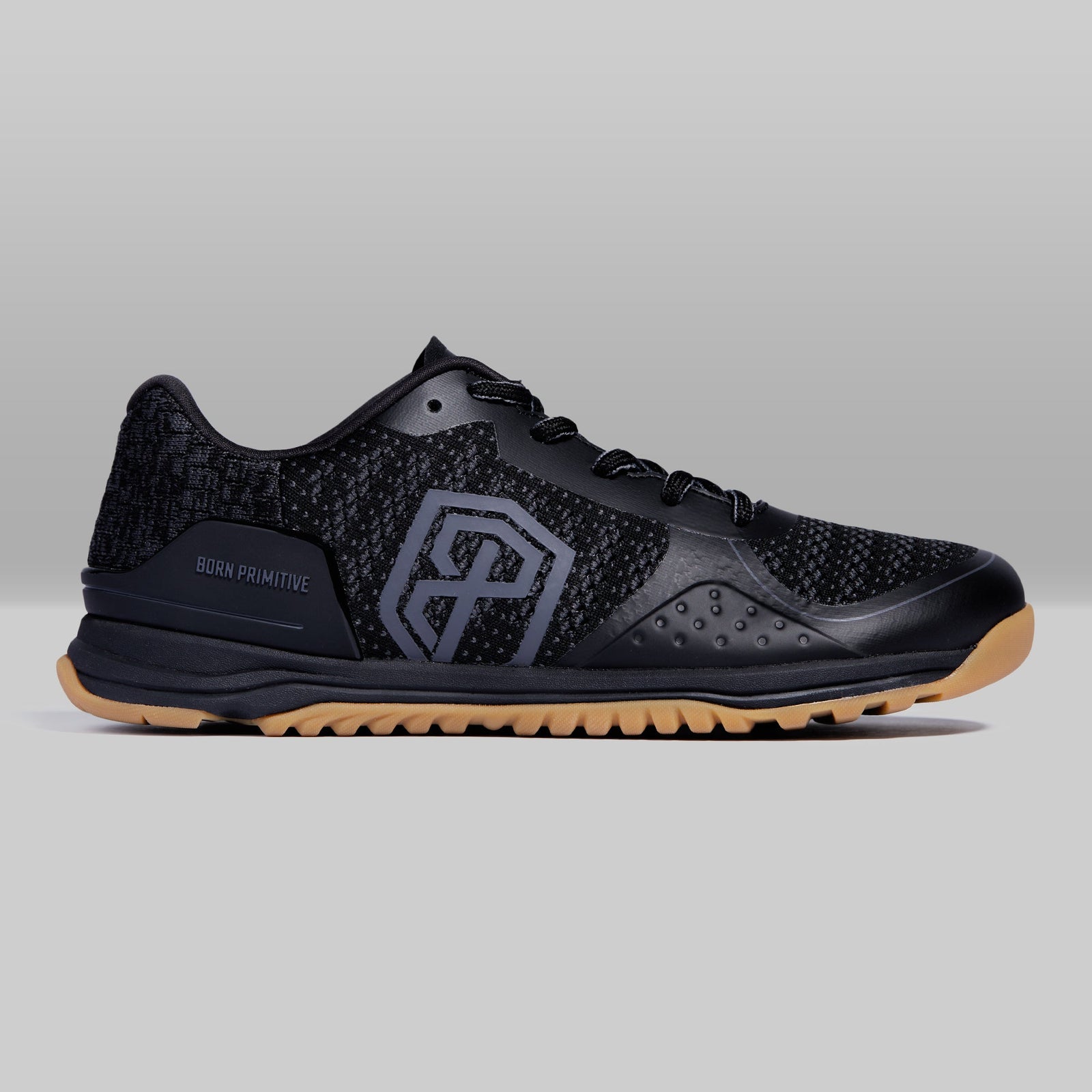
These are simply my own notes from shopping for a new pair: the shoes I tried, the measurements and specifications I could verify, the candidates I rejected and the reason I bought the Born Primitive Savage 1 in EU 43. The search became more concrete after I ordered the Adidas Dropset 4 Power in EU 44, found it too narrow and had to arrange a return. This is my personal ranking at the point of purchase, not a disguised comparison review or a claim that I tested every shoe.
Evidence note: I ordered the Adidas Dropset 4 Power in EU 44, tried the fit and am returning it because it felt too narrow. I have purchased the Savage 1 in EU 43, but it has not arrived and I have not trained in it yet. I have also not tested the INOV8 F-Lite, Reebok Nano 2.0, TYR CXT or Nano X5. Their positions below are research-based buying priorities, not reviews. Research and availability last checked 31 August 2026.
The short version
The order I ended up with in my notes is shown below. The pros and cons are research-based, not hands-on verdicts. Each box links to the current European product page; it is a source and shopping link, not an affiliate recommendation.
The Savage 1 is the pair I chose from this research, not a final verdict. A specification sheet can tell me that its toe box is 95 mm wide in a men’s US 9. It cannot tell me whether the upper presses on my midfoot after 40 minutes, whether my heel slips during lunges or whether I enjoy running in it.
The first question is simply whether it fits well enough to keep. The other shoes remain reference points in these notes, not a queue of pairs I plan to order.
What I am actually looking for
My priorities are not evenly split between lifting and running.
- Main use: normal strength training, functional movements, sled work and gym sessions.
- Secondary use: moderate running inside workouts.
- Occasional use: HYROX-style training rather than frequent racing.
- Fit: a roomy, foot-shaped toe box and slightly more midfoot width than a typical training shoe.
- Location: available in Europe without turning returns into an international logistics project.
- Budget: approximately the same broad range as the Savage 1, rather than specialist lifting shoes plus separate running shoes.
If I were training seriously for HYROX every week, this order could change. Eight kilometres of cumulative running would make weight, flexibility and cushioning much more important. For my actual use, I am willing to trade some running comfort for a more planted lifting shoe.
The shoes that define my fit
Brand sizes are inconsistent enough that the label inside the shoe is only a clue. These are the real references I used:
| Shoe | My size | What it tells me |
|---|---|---|
| Wyde Nova | EU 43 | Excellent length and foot-shaped fit. Published removable-footbed length: 275 mm. |
| Allbirds Wool Runner Mizzle | EU 43 | Good overall fit. The upper is forgiving. |
| Nike ACG Pegasus | EU 44 | Works for me. Roomier than my casual shoes. |
| Nike Vomero Plus | EU 44.5 | Usable for running. Slightly too long. |
| Adidas Dropset 4 Power | EU 44 | Ordered and tried for fit. Too narrow, so I am returning it. |
The important lesson is that my larger Nike and Adidas sizes do not mean I need a longer training shoe. In those brands, I am often using length to chase width. The Wyde Nova is the cleaner length reference because it already has the shape my foot wants.
The comparison matrix
This is the useful visual comparison for my decision. The width descriptions are deliberately qualitative because the brands and laboratories do not use one comparable measurement method.
| # | Shoe | Width evidence | Training bias | My current decision |
|---|---|---|---|---|
| 1 | Born Primitive Savage 1 | Published 95 mm toe box; midfoot not measured | Lifting-first hybrid | Purchased in EU 43; awaiting delivery |
| 2 | Reebok Nano 2.0 | Regular fit; unusually untapered toe area in lab test | Grounded general training | Useful toe-shape reference |
| 3 | INOV8 F-Lite | Official Wide fit; roomy independent internal mould | Conditioning and HYROX | Running-oriented research reference |
| 4 | TYR CXT-3 Wide | Dedicated Wide version | Heavy lifting and CrossFit | Lifting-first reference |
| 5 | Reebok Nano X5 | Regular fit; internal lab mould raises width doubts | Mainstream general training | Reference only; not my width gamble |
Measurements from different sources and methods are not directly comparable. A manufacturer measuring one line across a toe box is not doing the same test as a laboratory making a gel mould of the inside of a shoe. I use the numbers as evidence, not as a fake universal width league table.
The questions I could not answer from the product pages
These were the useful questions hiding inside my search. The answers were scattered across manufacturer pages, size charts, laboratory measurements, independent reviews and owner discussions. None of those sources was sufficient alone.
Does a wide toe box mean the whole training shoe is wide?
No. Toe-box width describes room at the front of the shoe. A shoe can allow the toes to spread while still fitting closely through the midfoot and heel.
This explains why “wide” recommendations often contradict one another. One person needs room around the big toe; another has a broad or flat midfoot. The first may love an anatomical regular-width shoe that makes the second person’s foot cramp.
The labels in this shortlist are not equivalent. Born Primitive gives the Savage 1 a 95 mm toe box and describes one standard-wide footwear shape, but it does not offer specialty widths such as 3E or 4E. INOV8 explicitly labels the F-Lite’s overall fit Wide. TYR sells dedicated Wide versions of the CXT. (Born Primitive width guide; INOV8 F-Lite fit; TYR CXT-3 Wide)
That is why the useful first question is not “Do you have wide feet?” It is “Where is your foot wide?”
Is the Born Primitive Savage 1 actually wide through the midfoot?
There is not enough measurement data to give a universal yes. Born Primitive publishes the toe-box width but not a comparable internal midfoot measurement.
The qualitative evidence is promising but mixed. An independent reviewer with an E-width foot found enough room and noted that the midfoot does not taper aggressively. In a separate owner discussion, a person with a wide midfoot reported that the Savage initially felt snug but relaxed after about a week; the same person found the F-Lite and Nano restrictive. Those experiences are useful because they describe foot shape, but neither one proves how the shoe will fit me. (That Fit Friend Savage 1 review; wide-midfoot owner discussion)
My conclusion is narrower: the Savage looks more promising than the Dropset for my moderately wide midfoot, but ordering it is still a fit test.
Are the Savage 1 millimetres the insole or footbed length?
Born Primitive does not say that they are. Its chart labels the numbers only as “Men’s Length (MM),” and its measuring instructions tell shoppers to measure their bare foot before consulting the chart. That makes the number a sizing reference, not a confirmed removable-insole measurement. (Born Primitive Savage 1 size chart)
Wyde is explicit that its size-chart measurements are taken from the removable footbed and recommends leaving 3–7 mm beyond the measured foot. (Wyde measurement method)
The two millimetre columns therefore cannot be treated as the same measurement merely because both use millimetres. This was one of the easiest mistakes to make in the entire search.
If a 275 mm Wyde Nova footbed fits, should I buy Savage 1 EU 42.5 or EU 43?
I bought EU 43—the size identified as US 10 in the Savage-specific chart—but this was a personal risk decision, not a conversion formula.
Born Primitive’s table associates EU 42.5/US 9.5 with 274.23 mm and EU 43/US 10 with 278.46 mm. If those were confirmed footbed lengths, 42.5 would appear to be the obvious match for my 275 mm Wyde. They are not confirmed footbed lengths, customer feedback includes some reports of a short or snug fit, and the brand recommends moving up when between sizes. The colour I wanted also could not be returned.
I went back and forth between 42.5 and 43. Taken together, those facts made EU 43 the lower-risk order for me. Someone with a measured foot below mine, a preference for a close lifting fit or the ability to return both sizes could rationally choose 42.5 instead.
Why does the Savage 1 have conflicting EU and US conversions?
The product page appears to combine a shoe-specific chart with a generic conversion table. In the millimetre-based Savage table, US 10 aligns with EU 43. Elsewhere on the same page, a generic table maps US 10 to EU 44.
For this purchase, I used the Savage-specific row that pairs EU 43 with US 10 and kept a screenshot of the chart. This is also why a sentence such as “I normally wear EU 43” is not enough information for cross-brand sizing.
Does the Savage 1 run small, and should wide feet size up?
There is enough conflicting evidence to justify caution, but not enough to say everyone should size up.
Born Primitive advises moving up when between sizes and specifically suggests an extra half-size for needs such as wider feet, bunions, swelling, orthotics or longer toes. Independent and owner reports are mixed: some describe a slightly short or snug initial fit, while others find their normal size correct. (Born Primitive fit guidance; That Fit Friend review; owner sizing discussion)
That uncertainty is why my own answer is deliberately specific: I chose EU 43 over 42.5 because I was between the two and could not return the colour—not because EU 43 is the universal answer for a 275 mm reference.
Does the Savage 1 need a break-in period?
Possibly around the tongue and midfoot, but a break-in period should not be used to excuse a clearly wrong fit.
Owner reports mention a snug midfoot or stiff tongue softening after several sessions, but the experience is not universal. If the initial fit is good enough to keep the shoe, comparing first wear with later sessions could reveal whether the upper genuinely adapts. A clearly wrong fit would not justify forcing a break-in period. (detailed owner review)
How far can you comfortably run in the Savage 1?
The honest pre-test answer is “probably short workout intervals, not long-distance running”—but comfort reports vary.
The low drop, flexible forefoot and dual-density construction make the shoe more run-capable than a rigid lifting shoe. Independent and owner accounts range from comfortable short runs to discomfort even over modest distances. That makes a universal mileage limit unhelpful. If the fit works and I decide to review it, useful checks would include 400 m repeats, a one-kilometre continuous run and a longer mixed session. (Born Primitive specifications; That Fit Friend review; owner discussion of running and heel wear)
Savage 1 or INOV8 F-Lite for wide feet, lifting and occasional HYROX?
Savage 1 for my lifting-first use; F-Lite if conditioning and running become more important.
The Savage has the firmer heel, denser construction and lower total stack I want under load. The F-Lite is lighter, officially wide and independently measured as roomy inside. It is also more flexible and looks better suited to repeated running intervals. The trade-off is a less planted heel, while one lab protocol produced weak traction and toe-upper durability results for the F-Lite. (Born Primitive Savage 1 specifications; INOV8 specifications; F-Lite laboratory measurements)
If I were preparing for HYROX every week, I would probably try the F-Lite first. For normal lifting with occasional HYROX, the Savage is the more logical experiment.
Is the Reebok Nano 2.0 a genuinely wide shoe?
Officially, no: Reebok calls it a regular fit. What makes it interesting is its unusually untapered front.
In RunRepeat’s older measurement method, the Nano 2.0 was 100.8 mm at the broad forefoot and 87.5 mm around the big toe. That second number explains why so many people describe it as spacious. It does not establish a wide midfoot, and measurements from that older method should not be compared directly with newer gel-mould tests. (Reebok Nano 2.0; Nano 2.0 laboratory review)
My interpretation: a strong candidate for someone who needs toe shape, not automatically the answer for someone who needs width through the entire foot.
Should I size up when the Dropset feels too narrow?
Not automatically. Sizing up adds length everywhere and only indirectly changes volume. It may reduce pressure, but it can also create excess space in front of the toes and poorer heel hold.
That is already visible in my own shoes: the Nike Vomero Plus in EU 44.5 is workable for running but slightly too long. The Wyde Nova in EU 43 fits because its shape supplies room without requiring unnecessary length.
If a training shoe is already long enough but tight through the midfoot, changing the model or width is usually a better experiment than adding another half-size.
Do I need one shoe for both lifting and HYROX?
Only if convenience matters more than optimising each activity. A stable, low-profile trainer and a cushioned HYROX race shoe solve different problems.
I am looking for one compromise because HYROX is occasional for me. Someone racing frequently may be better served by a stable training shoe for strength work and a separate running-oriented shoe for the event. The right answer changes with the proportion of running in the week, not merely with the word “HYROX” in a product description.
1. Born Primitive Savage 1: purchased in EU 43
Purchased · EU 43 · Awaiting delivery · Not yet tested
The Savage 1 looks like the best compromise for the training I actually do. Born Primitive describes a wide toe box measuring 95 mm in a men’s US 9, a lightweight knit upper and a dual-density footbed with a 4 mm drop. The heel section is firmer for lifting while the forefoot is softer for running and jumping. The company publishes total thicknesses of 21 mm at the heel and 17 mm at the forefoot. (Born Primitive specifications)
That combination is more relevant to me than simply choosing the widest shoe. I want enough forefoot freedom without losing the structured heel and lateral support that attracted me to the Dropset.
Why it is first
- The toe box is deliberately wide rather than accidentally spacious.
- The knit upper should have a better chance of tolerating some midfoot expansion than a heavily reinforced upper.
- The low drop and firm heel suit squats, deadlifts, carries and sled work.
- The softer forefoot and flexible construction should make short runs and dynamic movements less unpleasant than they are in a rigid lifting-first trainer.
- At €130 when I checked, it sits in the middle of the shortlist rather than at the premium end.
Why it is still a risk
Born Primitive says it offers one “standard wide” shape, not specialty widths such as 3E or 4E. The 95 mm figure describes the toe box, not the midfoot, and I could not find a comparable independent internal midfoot measurement. (Born Primitive width explanation)
Sizing is also needlessly confusing. The shoe-specific table lists US 9.5 at 274.23 mm and US 10 at 278.46 mm, but it labels those figures only as “Men’s Length.” It does not say that they are removable-footbed measurements, so I should not treat them as directly equivalent to the Wyde Nova’s 275 mm footbed.
The same page also contains conflicting EU conversions: its shoe-specific millimetre table maps US 10 to EU 43, while a generic table below maps US 10 to EU 44. The safest identifier is therefore the US size, not the EU label.
Because the colour I wanted could not be returned and the brand advises sizing up when between sizes, I ordered EU 43, corresponding to US 10 in the shoe-specific chart. That is a risk-management choice for this specific purchase, not a general size recommendation for everyone.
What would determine whether I keep it
- Is the midfoot actually wide enough, or only the toe box?
- Does the heel stay locked during lunges, burpees and sled work?
- Is the shoe stable enough under my normal lifting loads?
- How far can I comfortably run before I want a running shoe?
- Does the tongue feel sharp or overly stiff on a higher-volume foot, and does it soften?
- Can the removable insole be replaced by an orthotic without making the upper too tight?
- Does the knit upper loosen with use?
- How do the heel lining, outsole, tongue layers and toe overlay age?
- Does rope-climb work create premature outsole or upper damage?
Until the fit answers at least the first of those questions, the Savage 1 is my chosen candidate—not a Shrug Lab recommendation or a promise of a future review.
2. Reebok Nano 2.0: the roomy, low-profile reference
Not tested · Research reference

The Nano 2.0 is an old design that Reebok continues to sell, and that simplicity is part of the appeal. Reebok calls it a regular fit, so it is not a dedicated wide shoe. However, RunRepeat’s older-method lab test measured 100.8 mm at the broadest part and an unusually untapered 87.5 mm around the big-toe area in its test size. The same test found a low 18.1/15.3 mm stack, a measured 2.8 mm drop, a light 286 g weight and very high flexibility. (Reebok product page; RunRepeat laboratory review)
Those figures describe a light, grounded shoe with a genuinely square-looking front. That is attractive for lifting, lunges and general gym work. At €110 when checked, it was also the least expensive main candidate.
The reason it sits below the Savage is the rest of the foot. A broad toe area does not guarantee a roomy midfoot. The Nano is officially a regular fit, has a relatively narrow heel platform and is less structured than the Savage or TYR. The same breathable mesh that makes it flexible also scored poorly in RunRepeat’s abrasion test.
My read: potentially excellent if the toe box is the whole problem; less certain when the midfoot also needs space and the shoe has to feel secure under load.
3. INOV8 F-Lite: the HYROX-leaning alternative
Not tested · Conditioning-oriented reference

The current F-Lite is the clearest wide option in the shortlist. INOV8 labels the fit Wide and publishes a 260 g weight, 4 mm drop and 12/8 mm midsole stack. The upper uses a supportive MET-CRADLE around the midfoot, while the forefoot is designed to move more freely. The company also warns that the model can fit small and suggests going up half a size when uncertain. (INOV8 F-Lite specifications and sizing)
An independent gel-mould test supports the width claim: RunRepeat measured 99.6 mm at the broadest internal point, 78.1 mm around the toes and 30.7 mm of toe-box height in its test shoe. It also found the shoe more flexible than the training-shoe average. (RunRepeat F-Lite laboratory review)
On paper, this is probably the best option here for running intervals, burpees and fast transitions. It is lighter and more flexible than the Savage and considerably lighter than the TYR.
Why is it only third? My training is lifting-first, and the same lab test found a narrow heel platform, a very flexible heel counter, poor toe-upper abrasion resistance and a low 0.21 friction result in its traction protocol. Laboratory grip on a test surface does not perfectly predict sled-carpet or rubber-floor performance, but it is enough to stop me ordering blind when the Savage better matches my priorities.
My read: the model most likely to move to first place if I start doing HYROX regularly rather than occasionally.
4. TYR CXT-3 Wide: credible, but more lifting shoe than I need
Not tested · Reference option
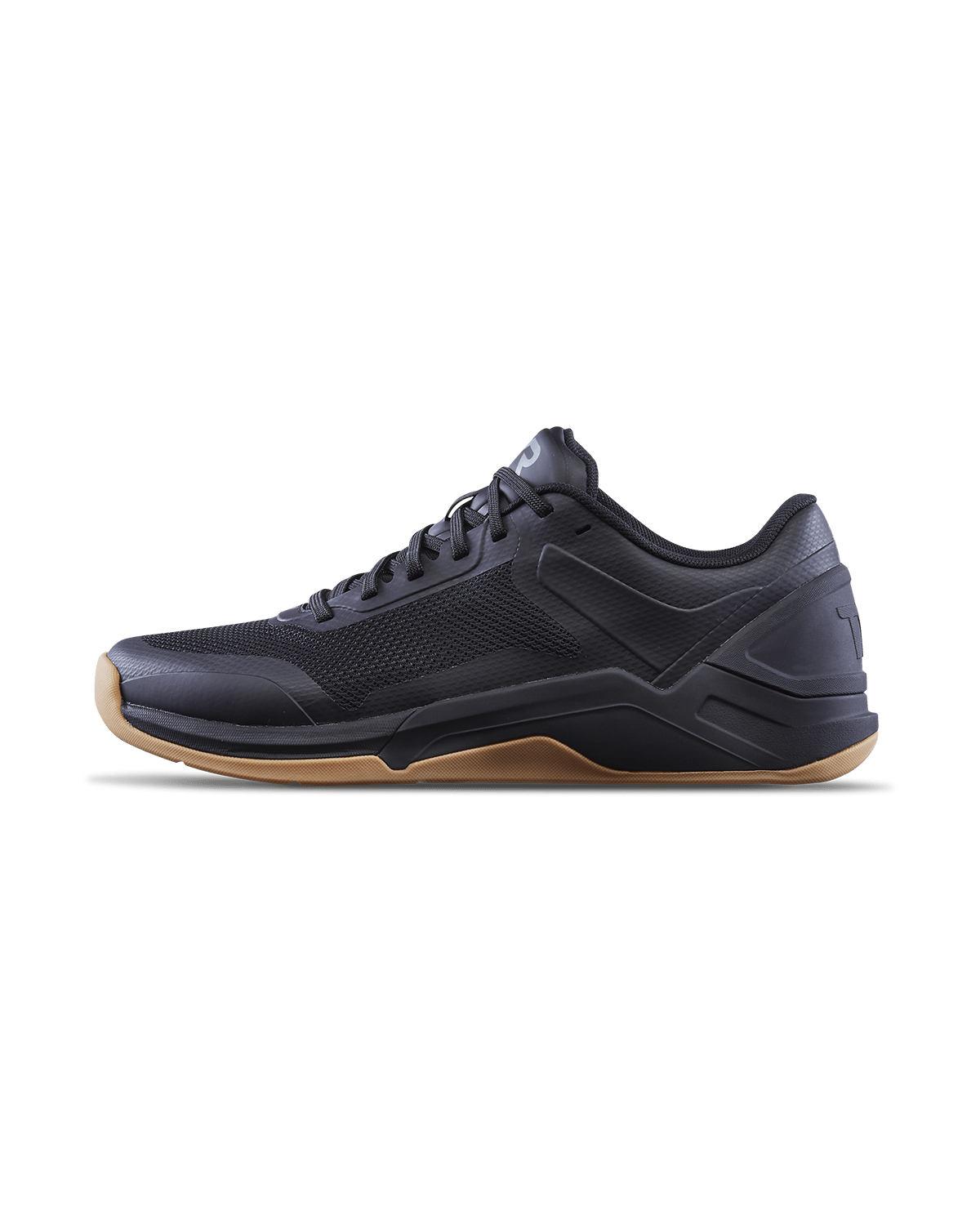
TYR deserves a place because it sells an actual Wide version rather than relying only on toe-box language. The previous CXT-2 Wide used a platform TYR described as 4 mm wider than the CXT-1, with a 7 mm drop, a stable heel and flexible forefoot. It was unavailable in my size when I was ready to buy.
The newer CXT-3 Wide is easier to justify for someone whose training is dominated by heavy lifting and CrossFit-style work. TYR publishes a 355 g weight in men’s US 9, a 9 mm drop, a 25/16 mm stack, an external TPU heel counter and an anatomical wide toe box. (TYR CXT-3 Wide specifications)
That is a lot of structure. It may be reassuring under a barbell, but it is heavier, higher and more expensive than I want for a shoe that will also see moderate running. I would reconsider it if the Savage fails specifically because I need more platform width or heel stability.
My read: a strong lifting-first fallback, not the most proportionate first purchase for me.
5. Reebok Nano X5: mainstream, but not my width gamble
Not tested · Reference option

The Nano X5 is the obvious mainstream alternative. It has a structured heel, a more forgiving forefoot and a toe shape that does not taper aggressively. Many people describe it as roomy.
The available internal measurements tell a more complicated story. RunRepeat’s gel mould measured 93.8 mm at the broadest point, below its training-shoe average, while the toe area itself was close to average at 73.6 mm. Toe-box height was only 23.9 mm. (RunRepeat Nano X5 laboratory review)
That does not prove it would be too narrow for me. Shoe fit is three-dimensional, uppers deform and one lab size cannot reproduce every foot. It does mean I have less reason to gamble on it after the Dropset felt restrictive.
My read: probably a good general training shoe; not the strongest answer to my particular problem.
What I rejected after actually trying it
Adidas Dropset 4 Power
Ordered in EU 44 · Tried for fit · Returning

The Dropset was my first actual purchase in this search. I ordered the Dropset 4 Power in EU 44, tried the fit and immediately ran into the problem I was trying to solve: it was too narrow. I now have to return it.
It gave me the stable training-shoe feeling I expected, but going longer would not fix the underlying shape and would push me further away from the length that already works in my Wyde Nova.
This is a personal fit rejection, not a claim that the Dropset is objectively narrow for every foot. Someone with a narrower midfoot may find the secure fit to be a strength.
Where these notes stop
The Savage 1 in EU 43 is ordered. Receiving it will answer the immediate question—whether it fits well enough to keep—not prove that the research ranking was correct.
I am not planning to order the Nano 2.0, F-Lite, CXT-3 Wide or Nano X5 as part of a series. They stay here because they helped me make this purchase decision and may help someone facing the same trade-offs.
If the Savage fits and I use it enough to have something worthwhile to report, I may add a separate hands-on review with original photographs, measurements and longer-term observations. If it does not fit, the honest update can simply record that outcome. Either way, this article stands on its own as my research notes and personal ranking at the time I bought one pair.